The Impact of Digital Marketing
Introduction
In an era where over 5.66 billion people actively use social media—nearly 69% of the global population—the impact of digital marketing has never been more significant. Businesses are shifting from traditional methods to online strategies that drive measurable results. Digital marketing encompasses SEO, content creation, social media engagement, email campaigns, and paid advertising, revolutionizing how brands connect with audiences.
This article delves into the transformative effects of digital marketing, highlighting its benefits, challenges, and real-world examples. Whether you're a small business owner or a marketing professional, understanding this impact can help you leverage tools like AI and data analytics for sustained growth. As global digital ad spending is projected to reach $786.2 billion in 2026, staying informed is essential.
What is Digital Marketing?
Digital marketing refers to promoting products or services through online channels such as search engines, social media, email, and websites. Unlike traditional marketing, it allows for real-time interaction and data-driven decisions.
Key components include:
- Search Engine Optimization (SEO): Improving visibility on search engines.
- Content Marketing: Creating valuable content to attract and retain audiences.
- Social Media Marketing: Engaging users on platforms like Instagram and LinkedIn.
- Pay-Per-Click (PPC) Advertising: Targeted ads that charge per click.
- Email Marketing: Personalized campaigns with an average open rate of 22.2%.
Its impact lies in scalability—reaching global audiences at a fraction of traditional costs.
Digital Marketing Infographics – Infograpia
Caption: Infographic illustrating key elements of digital marketing strategies. Alt text: Digital marketing infographic showing SEO, social media, and content channels.
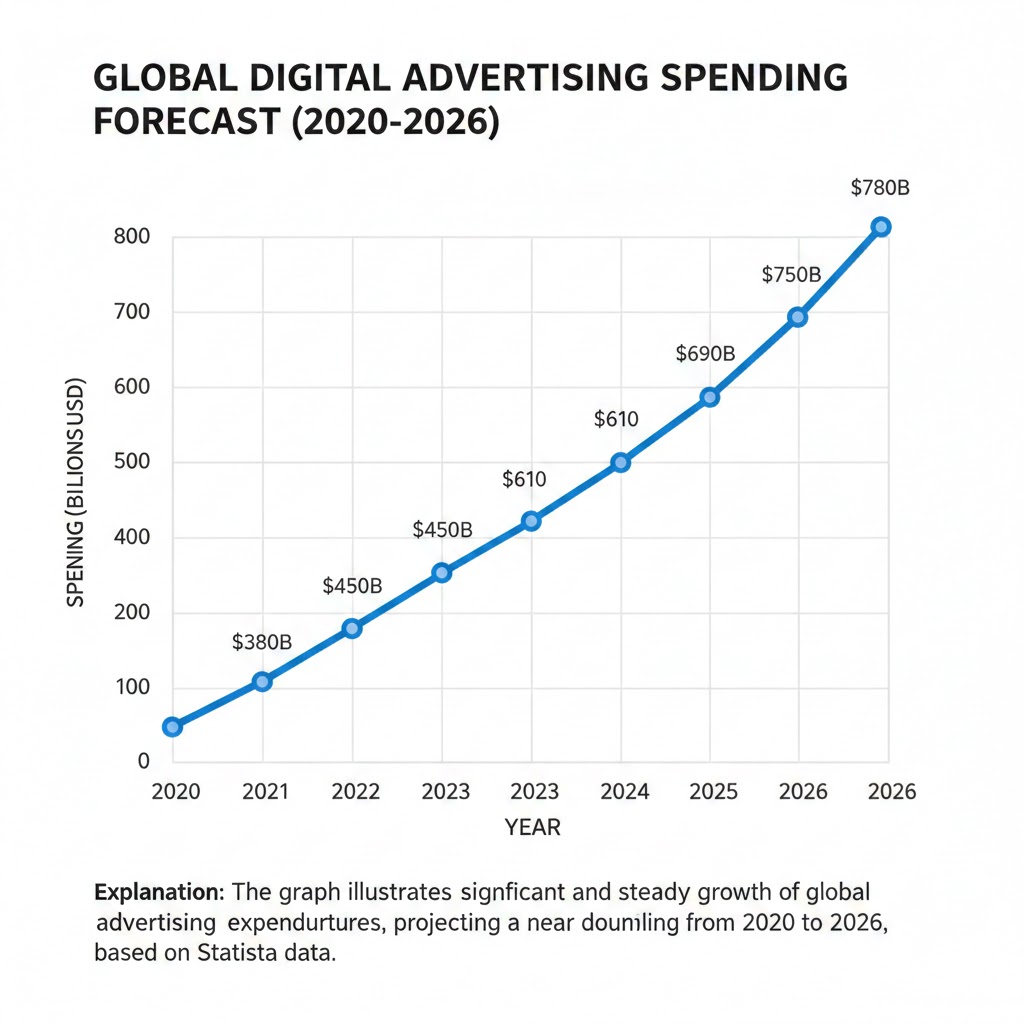
Explanation: The graph illustrates significant and steady growth of global advertising expenditures, projecting a near doubling from 2020 to 2026, based on Statista data.
Caption: Global Digital Advertising Spending Forecast (2020-2026). Alt Text: A line graph showing the projected increase in global digital advertising spending from $380 billion in 2020 to $780 billion in 2026.
Benefits of Digital Marketing
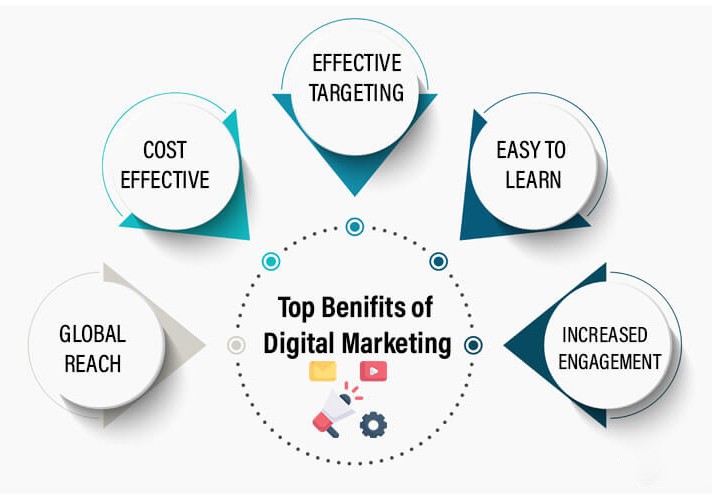
The impact of digital marketing extends to cost-effectiveness and precision targeting.
- Global Reach: Unlike print ads, digital campaigns can target specific demographics worldwide.
- Measurable Results: Tools like Google Analytics provide real-time data on engagement and conversions.
- Cost Efficiency: PPC accounts for 39.5% of digital ad market share, offering high ROI.
- Personalization: AI enables tailored experiences, with 88% of organizations scaling AI programs.
- Customer Engagement: Social media fosters loyalty, with influencer marketing surpassing traditional ad spends in 2025.
These advantages help businesses nurture leads, with 74% of marketers noting content marketing's role in demand generation.
Challenges in Digital Marketing
Despite its benefits, digital marketing presents hurdles.
- Market Saturation: 53% of marketers cite content overload due to AI.
- Privacy Concerns: Regulations like GDPR demand careful data handling.
- Algorithm Changes: Platforms like Google update search algorithms, impacting visibility.
- High Competition: With 93% of web traffic from search engines, standing out requires constant optimization.
- Skill Gaps: Rapid AI adoption (from 78% to 88% in one year) requires upskilling.
Addressing these through ethical practices and continuous learning is key.
The Main Digital Marketing Strategies
Digital marketing relies on several powerful strategies that help businesses increase visibility, attract targeted audiences, and boost sales. Each approach serves a distinct purpose, and when combined, they form a strong and effective marketing ecosystem.
- Search Engine Optimization (SEO): Increasing Visibility on Google
Search Engine Optimization (SEO) includes all the techniques used to improve a website’s ranking in search engine results pages. The higher a website appears in search results, the more organic (free) traffic it can generate.
Key components of SEO include:
- Keyword Optimization: Using relevant search terms that potential customers frequently type into search engines.
- High-Quality Content: Creating valuable blog posts, guides, and FAQs that answer users’ questions and provide useful information.
- Link Building (Netlinking): Earning backlinks from reputable websites to strengthen your site’s authority and credibility.
Case Studies of Successful Digital Marketing Campaigns
Real-world examples highlight digital marketing's impact.
CeraVe's Anti-Advertising Campaign (2024-2025): Skincare brand CeraVe launched a humorous "anti-ad" Super Bowl campaign, generating over 32 billion earned impressions and dominating media coverage. This led to their highest-ever week of moisturizer sales, proving cultural buzz drives revenue.
Nike's AI-Powered Personalization: Using AI for customized experiences, Nike saw engagement soar. One campaign resulted in a 758% profitability increase QoQ by optimizing paid media.
Domino's AI Marketing Integration: Domino's leveraged AI for predictive ordering, boosting customer retention and revenue. This approach exemplifies scalable AI use in 2025 success stories.
These cases show how innovative strategies yield tangible results.
Future Trends in Digital Marketing
Looking to 2026, AI will dominate, with agentic AI enabling one-to-one interactions. Trends include:
- Short-form video dominance.
- Social commerce growth.
- Authenticity-driven content.
- Privacy-focused measurement.
Marketers should prepare for these shifts to maintain competitive edges.
Conclusion
The impact of digital marketing is undeniable, driving innovation, efficiency, and growth amid challenges like saturation and regulations. By embracing SEO, AI, and data, businesses can achieve remarkable ROI, as seen in statistics and case studies.
Ready to harness this power? Start by auditing your online presence and integrating AI tools. For more strategies, explore our related articles on SEO optimization.
FAQs
What is the main impact of digital marketing on businesses? It enhances reach, reduces costs, and provides measurable insights, leading to higher ROI like $2.77 per $1 in content marketing.
How has AI changed the impact of digital marketing in 2026? AI boosts personalization and efficiency, with 94% of marketers planning its use for content creation.
What are the biggest challenges in digital marketing? Market saturation, privacy issues, and algorithm changes top the list.
Why is digital marketing better than traditional? It offers global reach and real-time adjustments at lower costs.
How can small businesses measure digital marketing impact? Use tools like Google Analytics for tracking engagement and conversions.