What was india in past? What Pre-Modern Texts Tell Us About Identity and Belonging
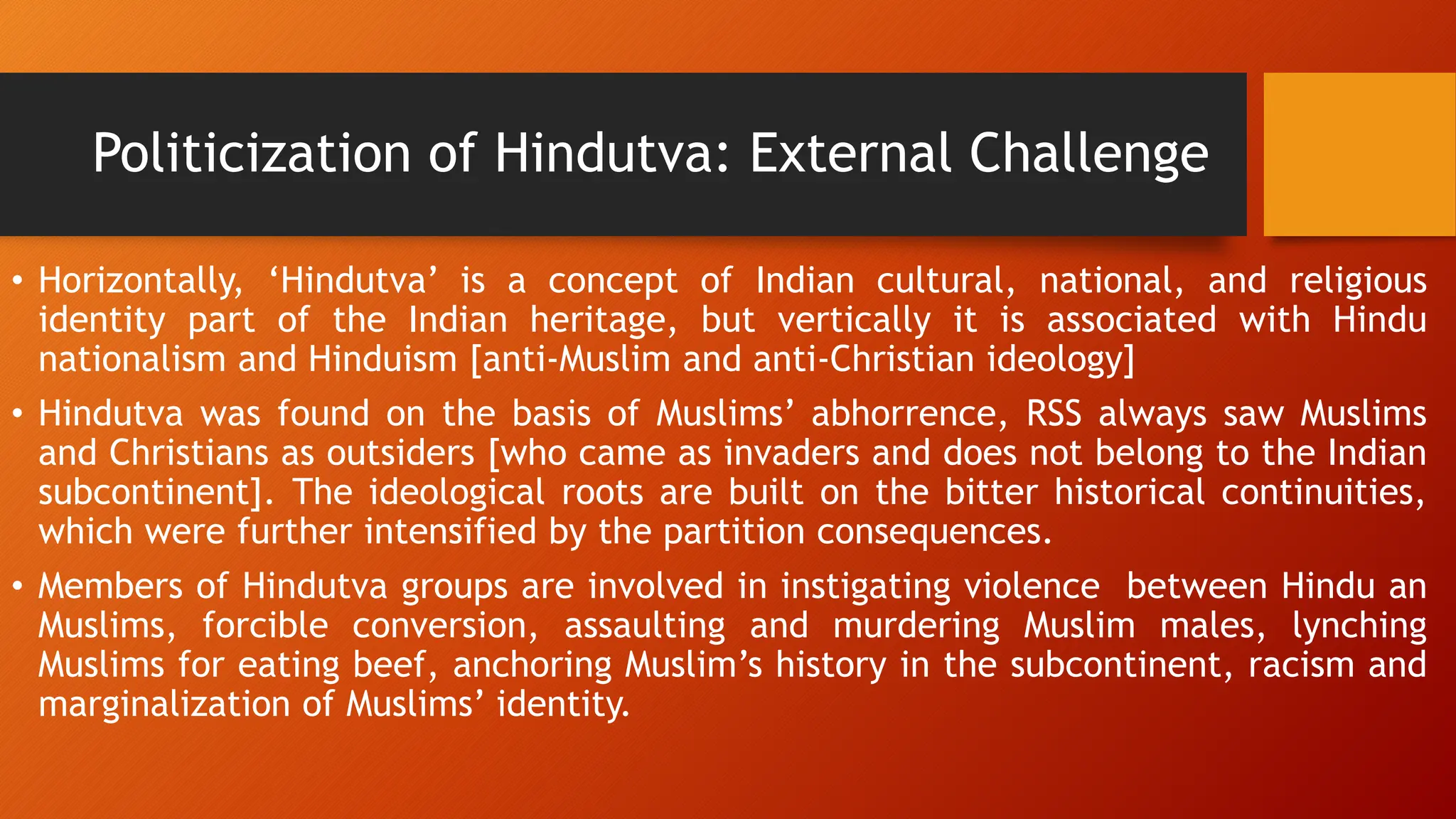
A central pillar of modern Hindu nationalist ideology (Hindutva) is the claim that India is fundamentally and eternally a Hindu Rashtra—a Hindu nation. This narrative asserts a continuous, 5,000-year-old Hindu civilization, positioning Muslims and Christians as foreign implants. It’s a powerful political story, but how does it align with the actual voices from India’s past? When we turn to pre-modern texts in Sanskrit, Persian, and other languages, a strikingly different, more complex picture emerges—one where religious identity was fluid, political belonging was not tied to faith, and the very idea of “India” was a tapestry woven from countless threads. The archives reveal that the answer to “Was India always Hindu?” is a resounding and nuanced no.
The Anachronism of the “Hindu Nation”
The first challenge in examining this question is linguistic and conceptual. The term “Hindu” itself, as a marker of religious identity comparable to “Muslim” or “Christian,” is a relatively modern development.
- A Persian Geographic Term: The word Hindu originates from the Persian name for the Indus River (Sindhu) and was used for centuries primarily as a geographic and ethnic identifier for people living beyond the Indus. It did not denote a unified religious community.
- Sanskrit Usage: In Sanskrit texts, the term Hinduka appears sparingly and late. When it does—as in the 15th-century Kashmiri chronicle of the Shah Mir sultans—it often refers vaguely to “high-caste” or “local” customs, not a pan-Indian religious faith. Pre-modern Sanskrit intellectuals more commonly used terms like Turushka (Turk) or Yavana (Greek/Arab) for foreigners, focusing on ethnicity or region, not religion.
The idea of a unified religious-political community spanning the subcontinent is a modern imagined community, retroactively projected onto a deeply fragmented and plural past.
Pre-Modern Rulers: Faith Was Policy, Not Identity Politics
The treatment of Indo-Muslim rulers in contemporary sources dismantles the “perpetual conflict” narrative. Texts show these rulers being integrated into Indic frameworks of kingship, not eternally othered as religious enemies.
1. The Shah Mir Sultans of Kashmir: “Hindu” Kings Who Were Muslim
The Sanskrit chronicles (Rājataraṅgiṇī) of the Shah Mir dynasty (1339-1561) are revelatory. Court historian Jonarāja describes Sultan Zain-ul-Abidin not as a foreign oppressor, but as a savior who rescued Kashmir from "mleccha" (foreign, often Muslim) rulers. The sultans are linked genealogically to the god Shiva and praised for upholding Hinduka (Brahmanical) customs. Here, a Muslim dynasty is celebrated in a Sanskrit history as righteous Indic kings, their faith being a secondary characteristic, not a defining, exclusionary one.
2. Mughal Emperors as Divine Incarnations
Sanskrit poets at the Mughal court performed even more astonishing intellectual gymnastics. In the 16th century, the poet Kṛṣṇadāsa, writing a Sanskrit grammar for Persian, explained Emperor Akbar’s birth as the descent of the god Vishnu. Why? To protect cows and Brahmins from harm—a classic duty of Hindu kingship. Akbar is literally framed as a divine incarnation (avatara) within Hindu theology, born into a mleccha (foreign) family to set things right. This is not the voice of a subjugated people; it’s the voice of intellectuals legitimizing new power within their own worldviews.
Temple Destruction: A Political, Not Theological, Act
A key piece of evidence used to argue for perpetual religious war is temple destruction. However, pre-modern sources contextualize this practice in a way that contradicts the “clash of civilizations” model.
As historian Audrey Truschke emphasizes, “The idea of targeting temples as a legitimate political practice… was developed and owned by Hindu kings long before we had Indo-Muslim rule.” For example, the Chola kings, fervent Shaivites, famously desecrated temples in rival kingdoms. Temples were political institutions, repositories of royal treasure and symbols of a king’s legitimacy. Destroying a rival’s temple was a standard act of war, akin to capturing a fort or seizing a treasury.
When Mughal rulers like Aurangzeb destroyed temples, they were often following this established Indian political playbook in response to rebellion (e.g., after Jat or Maratha uprisings). The same rulers also issued farmans (orders) protecting hundreds of other temples. The primary lens was realpolitik, not iconoclasm for its own sake.
Belonging and Identity in a Pre-Nationalist World
So, if not religion, what defined belonging and identity?
- Sovereignty and Service: Loyalty was to a king (raja) or emperor (padshah), not to a religious collective. A Rajput warrior’s primary identity was as a servant of the Mughal throne, not as a “Hindu” soldier in a “Muslim” army. The Mughal high command included Hindus like Raja Jai Singh, and Maratha armies included Muslim generals.
- Caste, Profession, and Region: Identity was local and hierarchical: you were a Brahmin from Kannauj, a Kayastha scribe from Bengal, a Kashmiri Pandit, or a Maratha horseman. These categories mattered far more in daily life than a monolithic religious identity.
- Cultural and Intellectual Fluidity: The massive Sanskrit-to-Persian translation project in Akbar’s court, or the Persian vocabulary woven into Lakshmīpati’s 18th-century Sanskrit texts, shows a world of intellectual exchange, not rigid borders. The shared language of power and culture was often multilingual.
The Colonial Imposition of Religious Binaries
The sharp, politicized Hindu-Muslim binary we know today is largely a colonial-era construct. British administrators and historians, operating with a European understanding of history as a sequence of “religious periods,” classified India’s past into the “Hindu period,” “Muslim period,” and “British period.”
They anachronistically interpreted conflicts through this lens, casting all Muslim rulers as “foreign” and all resistance as “Hindu” revivalism. This divide-and-rule historiography served to fracture Indian society and legitimize British rule as a neutral arbiter. Tragically, as Truschke notes, “Hindu nationalists are the major intellectual inheritors of British-era ideas.” They adopted this colonial framework but inverted its morality, championing the “Hindu period” and demonizing the “Muslim period” as a dark age.
Conclusion: Recovering a Plural Past for a Plural Present
The pre-modern archive offers a powerful antidote to modern identity fundamentalism. It reveals an India where:
- “Hindu” was not a unified political identity.
- Muslim rulers were integrated into, and justified by, Indian political and religious thought.
- Conflict was dynastic and political, not primarily religious.
- Belonging was based on loyalty, service, and local ties, not a singular faith.
Acknowledging this complex past is not “anti-Hindu”; it is pro-history. It is a refusal to allow the rich, plural, and syncretic tapestry of Indian civilization to be shredded into a narrow, exclusionary nationalist flag.
In a present where historical distortion fuels violence and discrimination, recovering these nuanced pre-modern voices is an urgent task. It reminds us that the idea of an eternally unified Hindu nation is not an ancient truth rediscovered, but a modern invention—and one that does grave injustice to the vibrant, complicated, and collectively owned story of the place we call India.
Comments (Write a comment)
Showing comments related to this blog.