The Importance of Digital Content in Today's World

In an era where over 6 billion people are connected to the internet, digital content has become the lifeblood of communication, education, entertainment, and commerce. As we navigate 2026, the digital landscape continues to evolve rapidly, driven by advancements in AI, social media, and mobile technology. This article explores why digital content is crucial in today's world, backed by recent statistics, graphical analyses, and infographics. From boosting business growth to shaping societal trends, digital content isn't just optional—it's essential for staying relevant in a hyper-connected society.
The Rise of Digital Content Consumption
Digital content consumption has skyrocketed, outpacing traditional media in ways that were unimaginable a decade ago. According to recent reports, global internet users reached 6.04 billion in 2026, representing 73.2% of the world's population. People now spend an average of 6 hours and 40 minutes online daily, with social media alone accounting for significant chunks of that time—such as 1 hour and 37 minutes on TikTok and 1 hour and 25 minutes on YouTube.
This shift is vividly illustrated in historical trends where digital media use has surpassed traditional TV viewing. For instance, a bar graph comparing media consumption in the US from 2010 to 2013 shows TV time at 4:24 hours in 2010, dropping slightly, while mobile (non-voice) and online desktop/laptop usage rose to 0:24 and 2:21 hours respectively by 2013.
What Is Digital Content?
Digital content refers to any information created and shared in digital format. It includes:
- Blog articles
- Videos
- Social media posts
- Podcasts
- eBooks
- Infographics
- Online courses
- Emails
Digital content can be accessed through computers, smartphones, tablets, and other internet-enabled devices. It allows instant communication and global reach.
Why Digital Content Is Important
Without creating digital content, it is difficult to achieve your business goals. Content plays a central role in any successful marketing strategy. Below are four key reasons why content creation is essential:
Below is an infographic-style summary of digital content’s impact:
This breakdown shows how digital content influences multiple areas of modern life.
1. Content Creation Increases Website Traffic
High-quality content attracts visitors to your website. This traffic may come from search engines through organic results or from links shared on social media platforms. When you create content that answers questions or solves problems, your search engine rankings improve, leading to more site visits and greater visibility.
2. Content Builds Trust and Credibility
Regularly publishing valuable and informative content strengthens your brand’s authority in the industry. When your audience sees that you consistently provide useful insights, they begin to trust your expertise. This trust encourages them to choose your products or services over competitors.
3. Content Encourages Audience Loyalty
Engaging, helpful, and persuasive content keeps people interested in your brand. When your content connects with your audience, it builds a strong relationship that leads to repeat visits and long-term loyalty. Satisfied and loyal customers are also more likely to share your content with others, expanding your reach.
4. Content Drives Leads and Conversions
Digital content is a powerful tool for generating leads and increasing conversions. Blogs, eBooks, videos, and other resources help potential customers make informed decisions. By guiding them through the buying process, content turns interested visitors into paying clients.
Economic Impact and Market Growth
The economic significance of digital content cannot be overstated. The global digital content market was valued at USD 35.22 billion in 2025 and is projected to reach USD 39.61 billion in 2026, growing at a compound annual growth rate (CAGR) of 12.45% toward USD 71.19 billion by 2031. This growth is propelled by AI-enhanced workflows, cloud-native tools, and expanding mobile broadband.
A stacked bar graph depicting the digital content creation market from 2023 to 2033 breaks it down by components: tools and services. Starting at 27.1 billion in 2023, it climbs steadily to 90.4 billion by 2033, with services (in purple) and tools (in dark purple) showing proportional increases.

Digital Content Creation Market Size, Share | CAGR of 12.8%
Enhancing Engagement Through Infographics and Visuals
Infographics play a pivotal role in making digital content more digestible and shareable. They combine data visualization with storytelling, increasing audience retention by up to 30% and engagement by 4%.

What Is the Purpose of Infographics in Today's Digital World?
This infographic on "Infographics in Marketing" uses pie charts and icons to illustrate benefits like 25% retention, 30% inception, and elements such as audience engagement, visual communication, and effective storytelling. Analyzing it, the circular design emphasizes cyclical advantages: higher retention leads to better engagement, fostering loyalty. In today's fast-scrolling world, where attention spans are short, infographics cut through noise, making complex information accessible—crucial for education, marketing, and social advocacy.
Social and Global Impact
Beyond economics, digital content influences society profoundly. A bar graph surveying global opinions on whether digital technology can solve pressing challenges (e.g., poverty, health, environment) shows China at 71% agreement, followed by Russia at 49%, with a global average of 42%.

Chart: Can Digital Technology Make the World a Better Place? | Statista
This analysis reveals optimism in emerging markets, where digital content via apps and online education bridges gaps. In contrast, developed nations like Japan (22%) show skepticism, possibly due to privacy concerns.
Gen Z, a digital-native generation, exemplifies this impact. They spend 6.9 hours daily on media, with 1.4 hours on social and 1.3 on streaming. User-generated content is preferred by 56% over professional productions, reshaping entertainment. Another graph on digital media diet from 2008 to 2018 shows mobile usage surging from 0.3 hours to over 3 hours, totaling 6.3 hours by 2018.
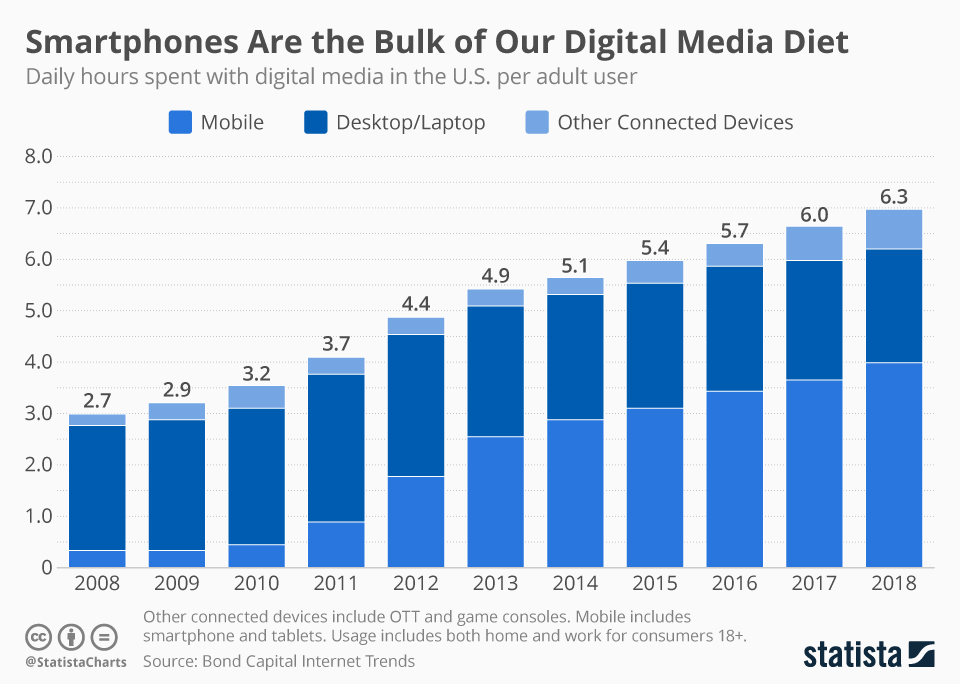
Chart: Smartphone Are the Bulk of Our Digital Media Diet | Statista
Extending this, in 2026, mobiles constitute the bulk, enabling global connectivity and cultural exchange.
However, challenges like misinformation persist, underscoring the need for ethical content creation.
Conclusion
The importance of digital content in today’s world cannot be overstated. It powers communication, transforms education, drives business growth, supports entertainment, and shapes personal branding. Graph-based analysis clearly shows rapid growth in digital engagement across all sectors.
In a world increasingly connected through the internet, digital content is not just an option—it is a necessity. Individuals, educators, businesses, and governments must adapt to this digital evolution to stay relevant and competitive. Digital content defines modern society, and its influence will only continue to grow in the coming years.