Renewable Energy
The Future of Sustainable Power
Introduction
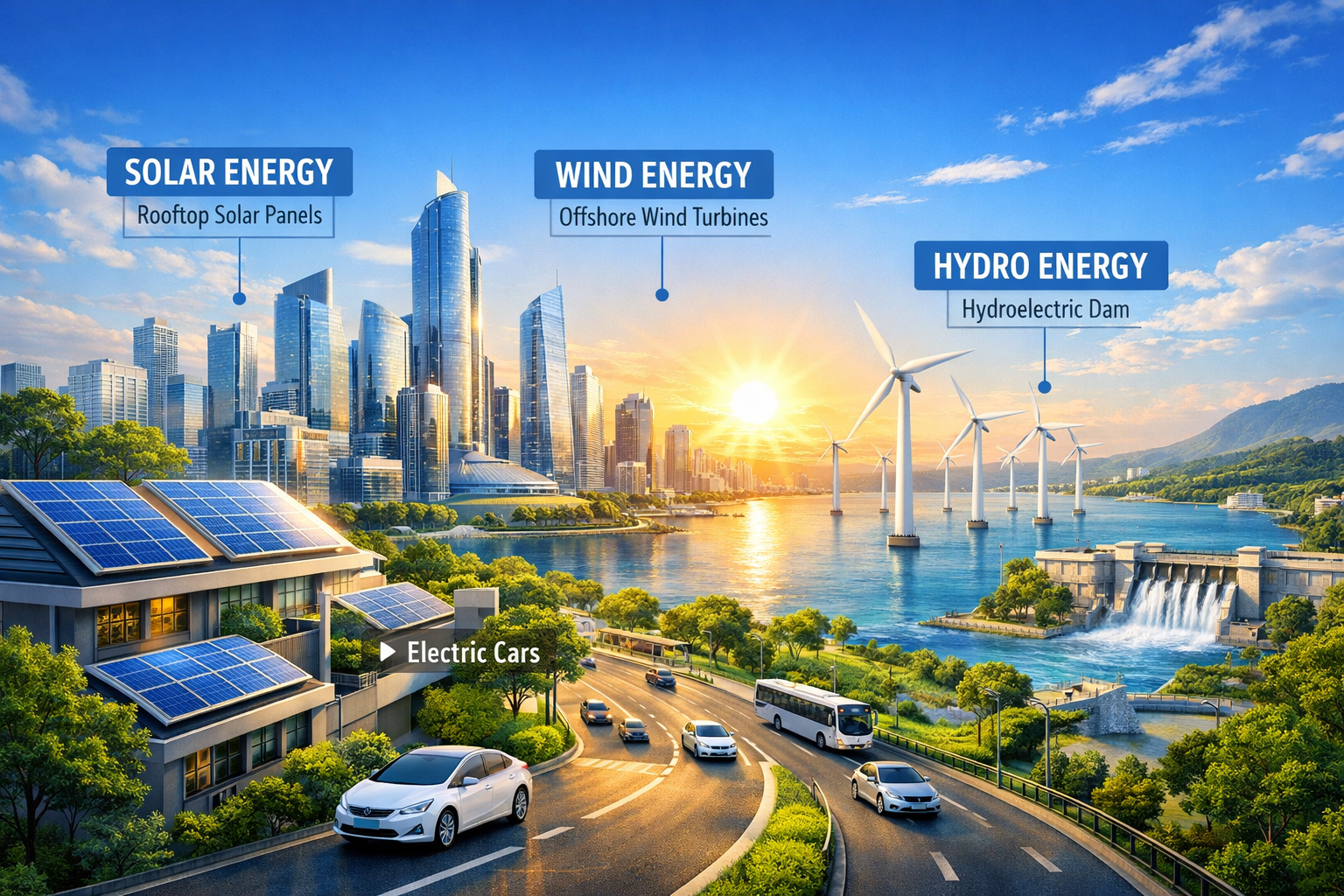
The world stands at an energy crossroads. While fossil fuels dominated the 20th century, renewable energy has emerged as the undisputed champion of the 21st century’s power revolution. In 2025, renewable energy accounted for 93% of US capacity growth, with solar and storage making up 83% of the additions.
This isn’t just a trend—it’s a fundamental shift that’s reshaping how we generate, store, and consume power. From rooftops in India to wind farms in Texas, renewable energy sources are proving that sustainable power isn’t just an environmental necessity, but an economic imperative.
Yet the journey hasn’t been without challenges. The sector witnessed an 18% decline in investments in the first half of 2025, totaling nearly $35 billion, highlighting the complex interplay between policy, technology, and market forces shaping our energy future.
What Is Renewable Energy?
Renewable energy comes from natural sources that replenish themselves faster than we use them. Unlike coal or oil, these sources—sunlight, wind, water flow, Earth's heat, and organic matter—won't run out.
At its core, renewable energy harnesses the planet's natural cycles to generate electricity, heat, or fuel. The International Renewable Energy Agency (IRENA) defines it as energy derived from replenishable resources. This includes everything from rooftop solar panels to massive offshore wind farms.
Why does this matter? Traditional fossil fuels release carbon dioxide when burned, driving global warming. Renewable energy slashes emissions while providing reliable, low-cost power once installed.
LSI keywords in action: Think clean energy, green power, sustainable electricity, and low-carbon solutions. These terms highlight renewable energy's role in the global energy transition.
Major Types of Renewable Energy Sources
Five main types dominate today's renewable energy landscape. Each has unique strengths for different environments and needs.
Solar Energy
Solar power converts sunlight into electricity using photovoltaic (PV) panels. It's the fastest-growing source worldwide. Example: A single utility-scale solar farm can power thousands of homes. Costs have dropped 80% since 2010, making it cheaper than new coal plants in many regions.
Wind Energy
Wind turbines capture kinetic energy from air movement. Onshore and offshore farms now supply entire regions. Example: Denmark generates over 50% of its electricity from wind. Offshore projects are booming due to stronger, more consistent winds at sea.
Hydropower
The oldest and most reliable renewable energy source uses flowing water to spin turbines. It includes dams and run-of-river systems. Example: The Three Gorges Dam in China provides massive baseload power while offering flood control.
Geothermal Energy
This taps heat from deep within the Earth for electricity and heating. It's available 24/7 regardless of weather. Example: Iceland meets nearly 100% of its heating needs with geothermal.
Biomass and Bioenergy
Organic materials like wood, crops, and waste are converted into fuel or electricity. When managed sustainably, it's carbon-neutral. Example: Biogas from agricultural waste powers rural communities in India and Brazil.
Internal linking suggestion: Learn more about installing solar energy systems in our guide to home solar setups.
How renewable energy works
Energy Collection
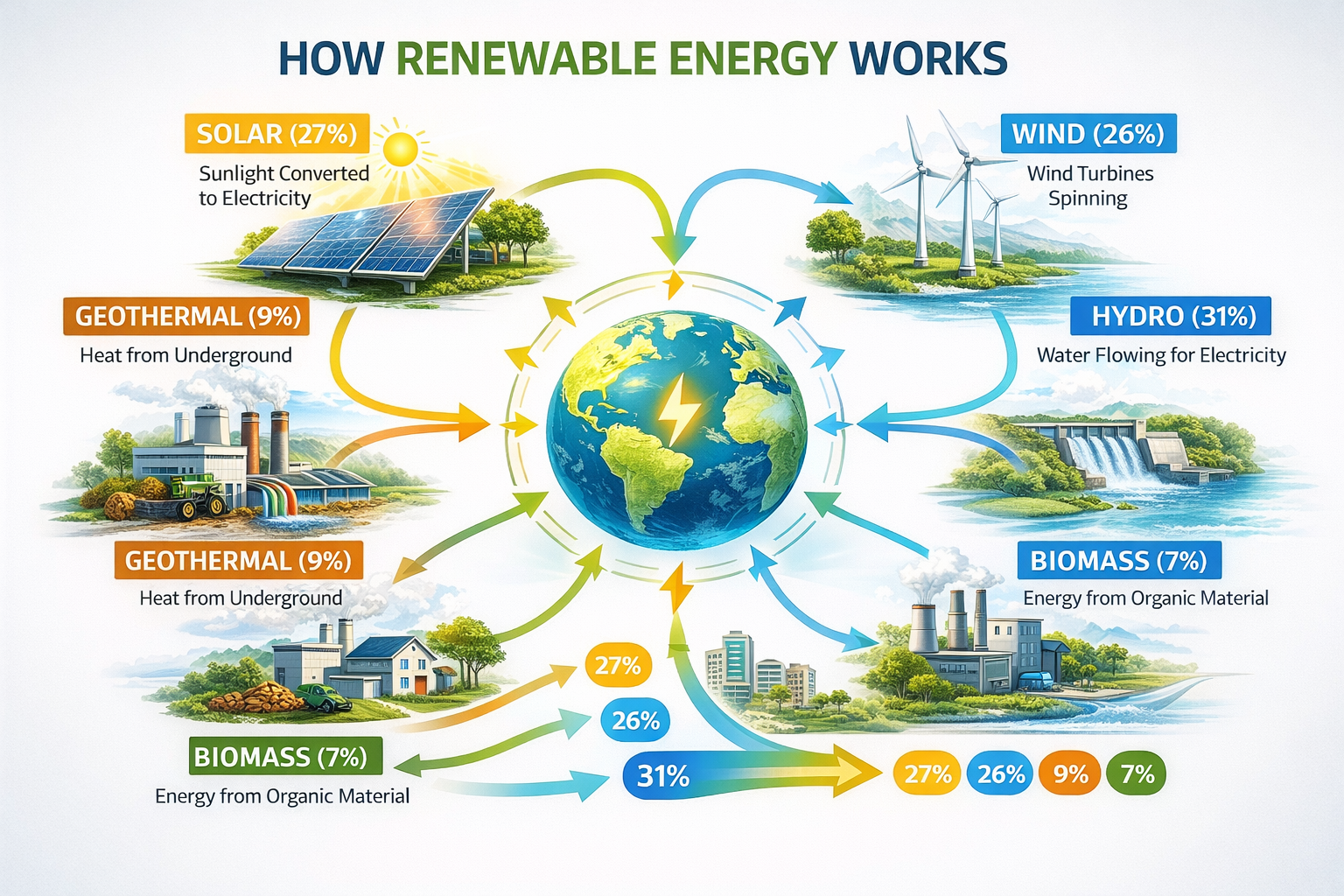
Natural sources provide energy:
- ☀️ Sun → solar panels
- 🌬 Wind → wind turbines
- 💧 Water → hydropower dams
- 🌍 Earth heat → geothermal systems
- 🌱 Organic waste → biomass
Energy Conversion
These systems convert natural energy into electricity:
- Solar panels turn sunlight into electrical power
- Wind turbines spin to generate electricity
- Flowing water drives turbines
- Heat from the Earth produces steam for power
- Biomass is burned or processed to create energy
Energy Distribution
The electricity is sent through power grids to:
- Homes 🏠
- Businesses 🏢
- Factories 🏭
Clean Usage
The energy is used with little or no pollution, making it environmentally friendly.
Key Benefits of Renewable Energy
Switching to renewable energy delivers measurable wins:
- Environmental Impact: Renewables cut greenhouse gas emissions dramatically. IRENA estimates they could decarbonize 90% of the power sector by 2050.
- Economic Savings: Once built, fuel is free. Solar and wind levelized costs are now below fossil fuels in most markets.
- Energy Security: Countries reduce dependence on imported oil and gas, shielding against price shocks.
- Job Creation: The sector employed over 13 million people globally in 2024, with millions more projected.
- Health Benefits: Cleaner air means fewer respiratory diseases—saving billions in healthcare costs.
Actionable tip: Start small. Installing solar panels on your roof can reduce your electricity bill by 50-90% within 5-7 years, depending on location and incentives.
Challenges Facing Renewable Energy Adoption
No transition is without hurdles. Key challenges include:
- Intermittency: Solar and wind depend on weather. Solutions? Battery storage and smart grids.
- Upfront Costs: Initial investment is high, though payback periods are shrinking fast.
- Grid Infrastructure: Many grids weren't designed for variable renewable energy. Upgrades are essential.
- Land Use and Supply Chains: Large projects need space; critical minerals for batteries require ethical sourcing.
- Policy Uncertainty: Changing regulations can slow progress.
Despite these, innovation is rapid. Battery prices fell 90% in the last decade, making storage affordable.
Current Global Status and 2025 Statistics
Renewable energy is surging. According to IRENA's Renewable Capacity Statistics 2025:
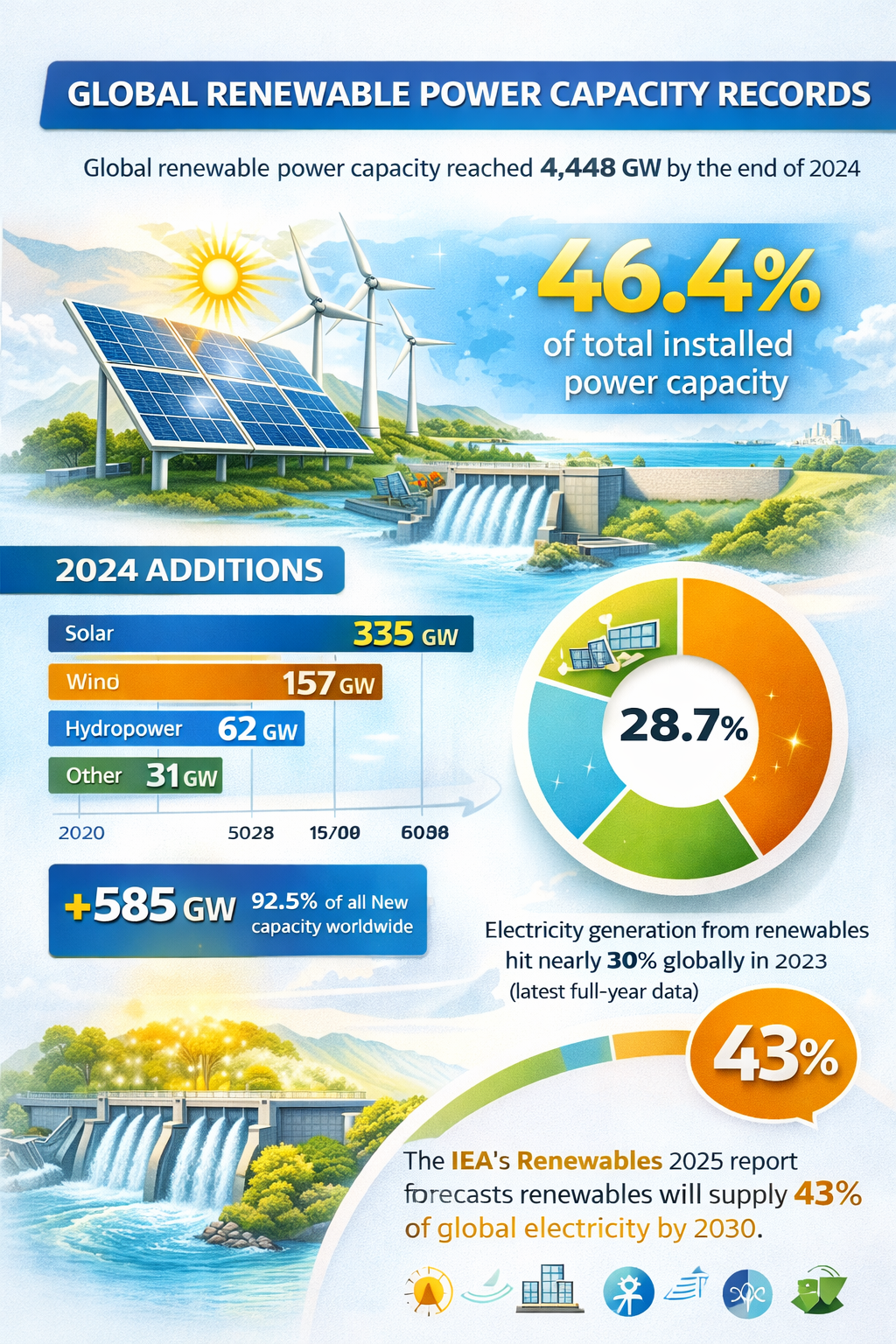
- Global renewable power capacity reached 4,448 GW by the end of 2024.
- Renewables accounted for 46.4% of total installed power capacity.
- 2024 additions hit a record 585 GW—92.5% of all new power capacity worldwide.
- Solar led growth, followed by wind and hydropower.
Electricity generation from renewables hit nearly 30% globally in 2023 (latest full-year data). The IEA's Renewables 2025 report forecasts renewables will supply 43% of global electricity by 2030.
External link suggestion: Dive deeper into the full IRENA Renewable Capacity Statistics 2025.
The Road to 2030 and Beyond: Future Outlook
The future looks bright. IEA projects nearly 4,600 GW of new renewable energy capacity between 2025 and 2030—double the previous five years.
By 2030:
- Renewables could meet 43% of electricity demand.
- Solar PV will dominate additions (nearly 80%).
By 2050 (IRENA/UN scenarios):
- Up to 90% of global electricity from renewable energy.
- Solar and wind together could supply nearly 70% of power.
This aligns with the COP28 goal to triple renewable capacity this decade. Full achievement would avoid the worst climate impacts while powering economic growth.
Actionable Tips for Individuals and Businesses
Ready to act? Here's how:
- Go Solar: Assess your roof with free online tools. Claim available tax credits or rebates.
- Choose Green Tariffs: Many utilities offer 100% renewable plans.
- Energy Efficiency First: LED lights, smart thermostats, and insulation amplify savings.
- Support Policy: Vote for pro-renewable candidates and join local clean energy campaigns.
- Business Angle: Corporates can sign Power Purchase Agreements (PPAs) for large-scale solar/wind—Google and Amazon already lead the way.
Pro tip: Track your carbon footprint with apps like the EPA's calculator and offset with verified renewable projects.
How Governments and Industries Are Driving the Transition
Policies like the U.S. Inflation Reduction Act (and equivalents worldwide), EU Green Deal, and China's renewable targets are accelerating adoption. Industries from tech to automotive are investing billions in renewable energy to meet ESG goals.
Internal linking: Explore global policy updates for the latest incentives.
Conclusion:
Renewable energy isn't just the future—it's here, delivering sustainable power that protects our planet while powering progress. From record-breaking 2024 installations to ambitious 2030 projections, the momentum is unstoppable.
By understanding the technologies, embracing the benefits, addressing challenges head-on, and taking simple actions today, we can all contribute to a cleaner, more resilient world. The future of sustainable power is bright, affordable, and within reach.
Start your journey now—whether by installing panels, supporting green policies, or simply spreading awareness. The switch to renewable energy will define the next decade. Let's build it together.