AI Is Not Cheating—Here’s Exactly How to Use It Ethically in Non-Fiction Writing
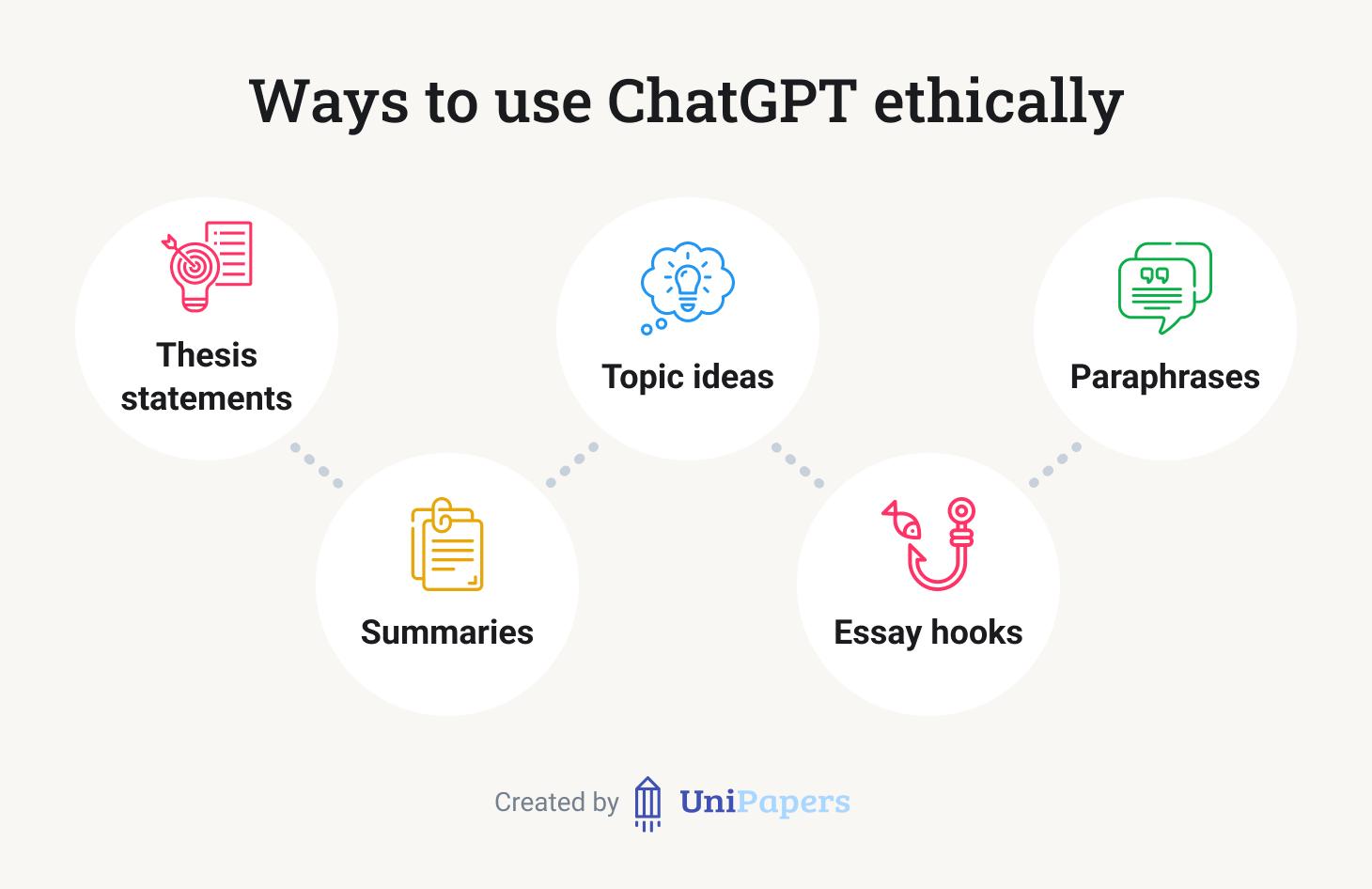
The integration of artificial intelligence into non-fiction authorship has sparked vigorous debate about authenticity, originality, and intellectual integrity. Far from constituting cheating, the ethical application of AI tools can function as a legitimate extension of the writer’s cognitive and creative process—provided the human author retains full responsibility for the final work, preserves voice and insight, and exercises rigorous oversight. This article examines evidence-based practices for incorporating generative AI responsibly into non-fiction book writing, drawing on established industry guidelines, observed workflows of productive authors, and emerging consensus among publishing professionals in the 2024–2026 period.
The Ethical Framework: AI as Tool, Not Author
Contemporary publishing ethics distinguish sharply between AI as a supportive instrument and AI as a primary creator. Major organizations and publishers consistently assert that large language models cannot meet authorship criteria: they lack accountability, cannot hold copyright, and are incapable of assuming responsibility for content accuracy, bias, or ethical breaches.
Core principles include:
- Human responsibility — The author remains fully accountable for every claim, citation, argument, and stylistic choice in the published work.
- Transparency — Disclosure of significant AI assistance is required when submitting to publishers or when the contribution materially affects the final text.
- Voice preservation — AI output must be rewritten, restructured, or heavily edited to reflect the author’s distinctive perspective and expression.
- Verification — All factual statements, data interpretations, and quotations derived from or suggested by AI must be independently checked against primary or authoritative sources.
These principles align across statements from the Authors Guild, Committee on Publication Ethics (COPE), Wiley, Taylor & Francis, and the Alliance of Independent Authors.
High-Leverage, Ethically Sound Use Cases
Productive non-fiction authors employ AI in narrowly defined, high-value roles that amplify human effort rather than replace it. The following applications demonstrate practical boundaries that maintain authorship integrity.
Research Acceleration and Pattern Identification
AI excels at synthesizing large volumes of information and surfacing connections that might otherwise require weeks of manual review. Authors frequently use large language models to:
- Generate comparative tables of existing titles in a category
- Suggest counter-arguments or alternative metaphors
- Compile initial reference lists from broad prompts
- Identify thematic clusters in transcribed spoken material
Ethical guardrails require the author to verify every fact, citation, and interpretation against original sources. AI functions here as an advanced research librarian, not a source of truth.
Outlining, Expansion, and Structural Feedback
Many writers feed their own bullet-point outlines or rough prose into AI and request expansion, reorganization suggestions, or structural critique. The resulting output serves as raw material that the author then rewrites substantially.
Common ethical practice includes explicit instructions such as “expand these points in neutral academic style without adding new facts” followed by line-by-line revision to infuse personal voice, nuance, and authority.
Dictation Cleanup and Surface-Level Polishing
Dictation workflows—especially prevalent in memoir and personal-experience non-fiction—produce conversational first drafts that benefit from AI-assisted cleanup of filler words, grammar inconsistencies, and minor phrasing. Authors typically retain complete control over meaning, tone, and emotional weight, using AI only for mechanical refinement.
Title, Subtitle, and Marketing Copy Brainstorming
AI generates large sets of title and subtitle variants quickly. Authors evaluate, combine, and refine options according to their strategic positioning. This application raises minimal ethical concerns because titles are functional rather than expressive of core intellectual content.
Table 1: Ethical vs. Problematic AI Applications in Non-Fiction Writing
Application | Ethical When… | Problematic When… | Disclosure Typically Required? |
Research synthesis & comparison | Author verifies every fact and citation | Treating AI summaries as authoritative sources | No (if only used for discovery) |
Expanding writer-provided outlines | Heavy rewriting in author’s voice | Minimal editing of AI-generated prose | Yes (if appreciable text retained) |
Dictation transcription & cleanup | Author edits for meaning, tone, emotion | Accepting raw output without substantive revision | Usually no |
Generating complete chapters | Never ethical for core content | Presented as author’s original work | Mandatory |
Title / subtitle brainstorming | Author selects and refines | AI-generated title used unchanged | No |
Fact-checking & reference suggestion | Author cross-checks primary sources | Relying on AI for accuracy without verification | No (if verification completed) |
Boundaries That Protect Authorship
Several red lines emerge consistently across guidelines and working author accounts:
- Never submit or publish AI-generated text as original prose without substantial rewriting.
- Do not use AI to mimic another writer’s distinctive style or voice.
- Avoid delegating analysis, synthesis of primary evidence, or drawing of original conclusions to AI.
- Never list AI tools as co-authors or contributors.
When appreciable AI-generated content is incorporated (even after editing), disclosure becomes ethically and contractually necessary. Publishers typically require explicit statements in the manuscript or front matter; some authors include brief acknowledgments in the preface or author’s note for reader transparency.
Practical Workflow Example
A typical ethically robust workflow might proceed as follows:
- The author dictates or writes a rough chapter section.
- The section is fed to AI with a prompt requesting structural feedback, alternative metaphors, or expansion of specified points.
- AI output is reviewed, fact-checked, and rewritten sentence-by-sentence to align with the author’s voice and reasoning.
- Final text is verified against source material.
- If significant AI assistance was used in early expansion, the author notes this in private documentation (and discloses to publisher if contractually required).
This sequence maintains human intellectual ownership while leveraging AI’s speed and pattern-recognition capabilities.
Implications and Future Directions
The responsible integration of AI tools appears poised to become standard practice among non-fiction authors who prioritize productivity without sacrificing authenticity. As detection methods improve and reader expectations evolve, transparency may shift from optional courtesy to expected norm—particularly for works positioned as authoritative or experiential.
Future developments likely include more sophisticated fine-tuned models designed specifically as writing assistants, clearer contractual language around AI use, and potentially standardized disclosure formats. Writers who establish rigorous personal boundaries now will be best positioned to adapt to these changes while preserving the intellectual and emotional value that readers seek from non-fiction.
In summary, AI is not cheating when employed as a disciplined collaborator under strict human direction. Ethical usage requires unwavering commitment to voice, verification, and accountability—principles that have always defined serious authorship.
Comments (Write a comment)
Showing comments related to this blog.