What is a Task? The Heart of Modern, Effective Language Teaching
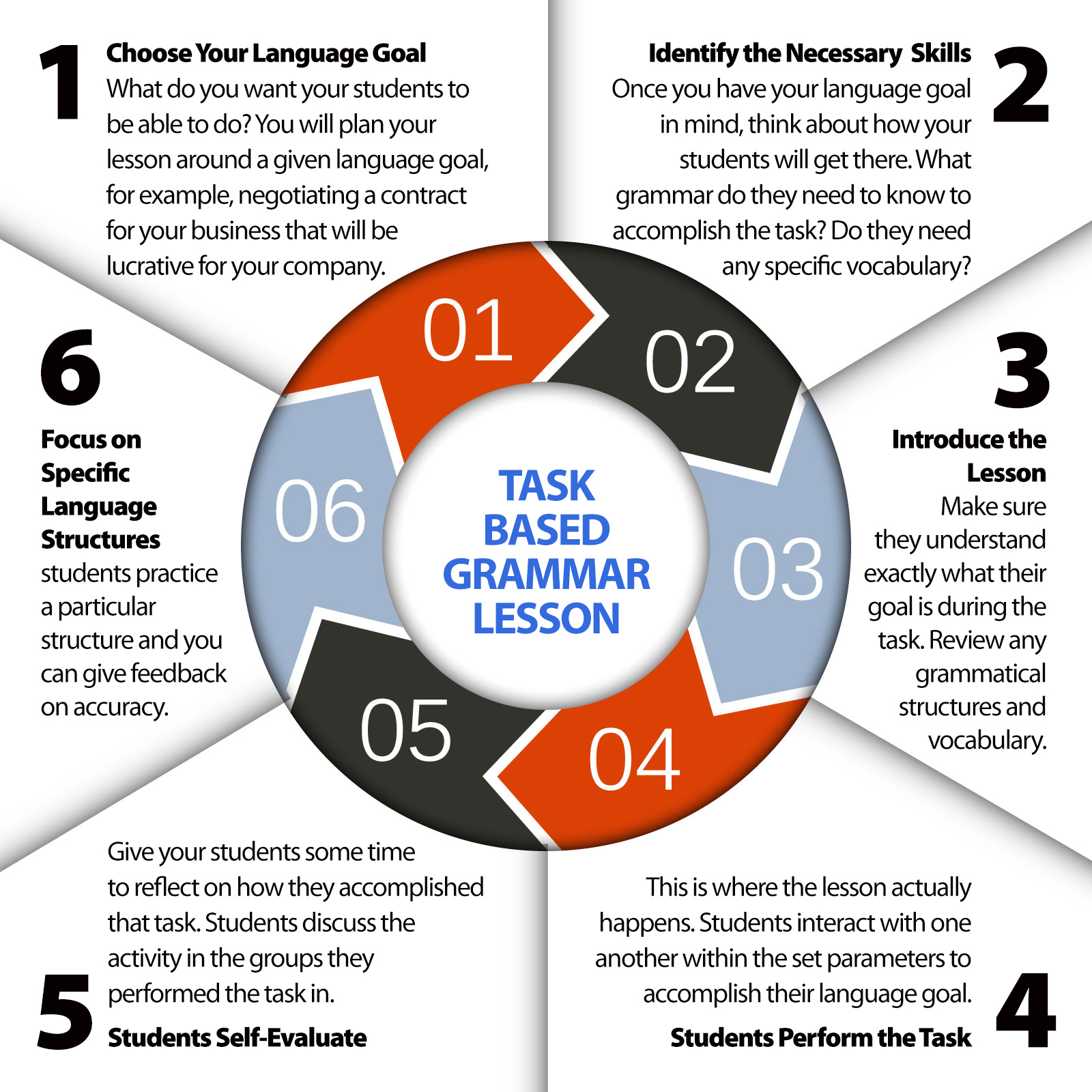
Confused about Task-Based Language Teaching? Learn Rod Ellis's 4 essential criteria for a true "task," see clear examples vs. exercises, and discover how this method builds real-world fluency. The definitive guide to TBLT.
For decades, language classrooms worldwide operated on a simple formula: learn a grammar rule, practice it with controlled exercises, and hopefully, one day, use it in real life. Teachers and students alike grew frustrated when this "hope" didn't materialize into fluent communication. The disconnect between classroom drills and real-world conversation sparked a pedagogical revolution, leading to one of the most influential modern approaches: Task-Based Language Teaching (TBLT).
At the heart of TBLT lies a deceptively simple question: What is a task? This isn't about busywork or grammar worksheets. As defined by renowned scholar Rod Ellis, a true pedagogical task is the engine of authentic language acquisition. Understanding its core components is the first step to transforming how we teach and learn languages. Let's dissect this central concept, moving beyond theory into practical classroom application.
Rod Ellis’s Four Criteria: The Litmus Test for a True Task
According to Ellis, a language teaching activity must satisfy four non-negotiable criteria to be considered a genuine "task." These criteria shift the focus from linguistic form to communicative meaning and outcome.
1. A Primary Focus on Meaning
In a task, learners are primarily concerned with understanding, conveying, or manipulating meaning to achieve a goal. They are not consciously focused on correctly using the past tense or a specific set of vocabulary. Their attention is on the message, not the medium. The language becomes a tool for communication, not the sole object of study in that moment.
2. The Existence of a "Gap"
A task must contain some kind of gap that needs to be closed through communication. Ellis highlights two main types:
- Information Gap: One person has information another person needs. For example, one student has a partially completed map, and their partner has the missing details.
- Opinion Gap: There is a problem, dilemma, or topic requiring discussion and a negotiated outcome. For example, a group deciding which candidate should receive a heart transplant based on patient profiles.
This "gap" creates a genuine need to communicate, mirroring real-life interactions.
3. Learners Use Their Own Linguistic and Non-Linguistic Resources
This is perhaps the most critical and radical criterion. The teacher does not pre-teach the specific language needed to do the task. Instead, learners must draw on their entire existing repertoire—words they know, grammatical structures they’ve partially acquired, gestures, facial expressions—to cobble together meaning and achieve the outcome. This empowers learners at all levels and allows a single task to cater to different proficiency levels.
4. A Clearly Defined Communicative Outcome
The success of a task is measured by whether the communicative goal was achieved, not by the grammatical accuracy of the language used. Did the pair correctly label all locations on the map? Did the group reach a consensus and justify their choice? This outcome-focused assessment reinforces the primacy of communication.
Task vs. Exercise: A Side-by-Side Comparison
The distinction becomes crystal clear when we contrast a task with a traditional exercise.
Feature | A TASK | AN EXERCISE |
Primary Focus | On meaning and message. | On linguistic form and accuracy. |
Presence of a Gap | Yes. An information or opinion gap exists. | No. It’s often text-manipulation (e.g., fill-in-the-blank). |
Learner Resources | Learners choose their own language. | Language is supplied. Learners manipulate given structures. |
Outcome | A communicative result (e.g., a completed list, a decision). | Accurate use of a target feature. |
Example | "What can you buy?" Students have different lists (info gap) and must converse to find out which items are available. | "Do you have any oranges?" "Yes, I have some oranges." Students substitute "oranges" with other words from a given list. |
Illustrative Example from Ellis:
- The Map Task (A True Task): The teacher describes the location of places on a map of an island ("Betteris is situated on the nose of the island..."). Students listen and write the names in the correct spots. This meets all four criteria: focus on understanding meaning (where to put the names), an information gap (the teacher knows, students don’t), students use their listening comprehension resources, and the outcome is a correctly labeled map.
- "Going Shopping" Dialogue (An Exercise): Students role-play a shopkeeper and customer using a scripted frame: "Do you have any [X]?" "Yes, I have some [X] / No, I don't have any [X]." The focus is on the "some/any" structure, there's no real gap (both can see the lists), language is prescribed, and the outcome is just the performance of the dialogue.
The Rich Taxonomy of Tasks in TBLT
Once you understand the core definition, you can design a powerful syllabus by manipulating task variables. Ellis outlines several key distinctions:
- Pedagogic vs. Real-World Tasks: Must a task mirror real life? Not necessarily. While "calling to book a hotel" is a real-world task, the "Map Task" or "Heart Transplant" discussion are pedagogic tasks—equally valuable for generating communication, especially in foreign language contexts.
- Input-Based vs. Output-Based Tasks: Beginners benefit massively from input-based tasks (listening/reading) where they process language without immediate production pressure. The Map Task is input-based. Output-based tasks (speaking/writing) come later, building on acquired language.
- Closed vs. Open Tasks: Closed tasks have one correct outcome (labeling the map). Open tasks have multiple possible solutions (discussing the best heart transplant candidate). Progression from closed to open helps build confidence and complexity.
- Unfocused vs. Focused Tasks: Most tasks are unfocused, designed for general communication. However, a focused task is subtly engineered to make a specific linguistic feature (like a past tense) useful or necessary, encouraging its "natural" use without explicit teaching.
Implementing TBLT: Two Main Pathways
Ellis explains that "using tasks" can happen in two primary ways:
- Task-Supported Language Teaching: This is the more familiar model, often aligning with the "Present-Practice-Produce" (PPP) sequence. A grammatical structure is first presented and practiced through exercises. A task is then used at the end as a "free production" stage to apply the pre-learned language. While useful, Ellis notes its limitations, as it assumes declarative knowledge can be easily converted into fluent use.
- Task-Based Language Teaching (Proper): Here, the task is the central unit of the syllabus. A lesson starts with a main task. Learners attempt it using their interlanguage. The teacher then provides "focus on form"—brief, corrective feedback or highlighting of linguistic features that emerged as needed during the task (e.g., recasting a student's error). This promotes incidental acquisition, where learners pick up language through meaningful use, and refines their emerging grammar systems in a more naturalistic way.
Why Does This Distinction Matter for Modern Language Teaching?
Understanding "what is a task" moves us beyond outdated, mechanical models of learning. It shifts the classroom dynamic from teacher-centered instruction to learner-centered communication. It acknowledges that language is not just a set of rules to be memorized but a tool for solving problems, sharing information, and building relationships. By designing activities that are genuine tasks, we create a microcosm of the real world inside our classrooms, where fluency isn't an abstract future goal but the very process of engagement.
Whether you are a teacher designing a curriculum or a self-directed learner seeking effective methods, applying the four criteria of a task can transform your approach. Look for activities with a gap, a goal, and the freedom to use your own voice. That is where authentic, durable language acquisition truly begins.
Comments (Write a comment)
Showing comments related to this blog.