Counter-Hegemonic Linguistics and the Critique of Historical Revisionism in Ganesh Devy’s Work
Abstract
This paper critically examines Professor Ganesh Devy’s sustained intellectual and activist opposition to what he terms “mindless erasure”—a political project of historical revisionism and linguistic purification advanced by Hindu nationalist forces in contemporary India. Drawing from his lectures, interviews, and the People’s Linguistic Survey of India (PLSI), the analysis positions Devy’s work as a counter-hegemonic discourse that debunks three core revisionist claims: (1) the “Golden Age–Decline” historical model; (2) the ideology of linguistic/racial purity; and (3) the political weaponization of Hindi against other Indian languages. This research argues that Devy provides a genetic, historical, and constitutional rebuttal to majoritarian cultural nationalism, grounding Indian identity in pluralism, synthesis, and federal diversity.
1. Introduction: “Mindless Erasure” as a Political Project
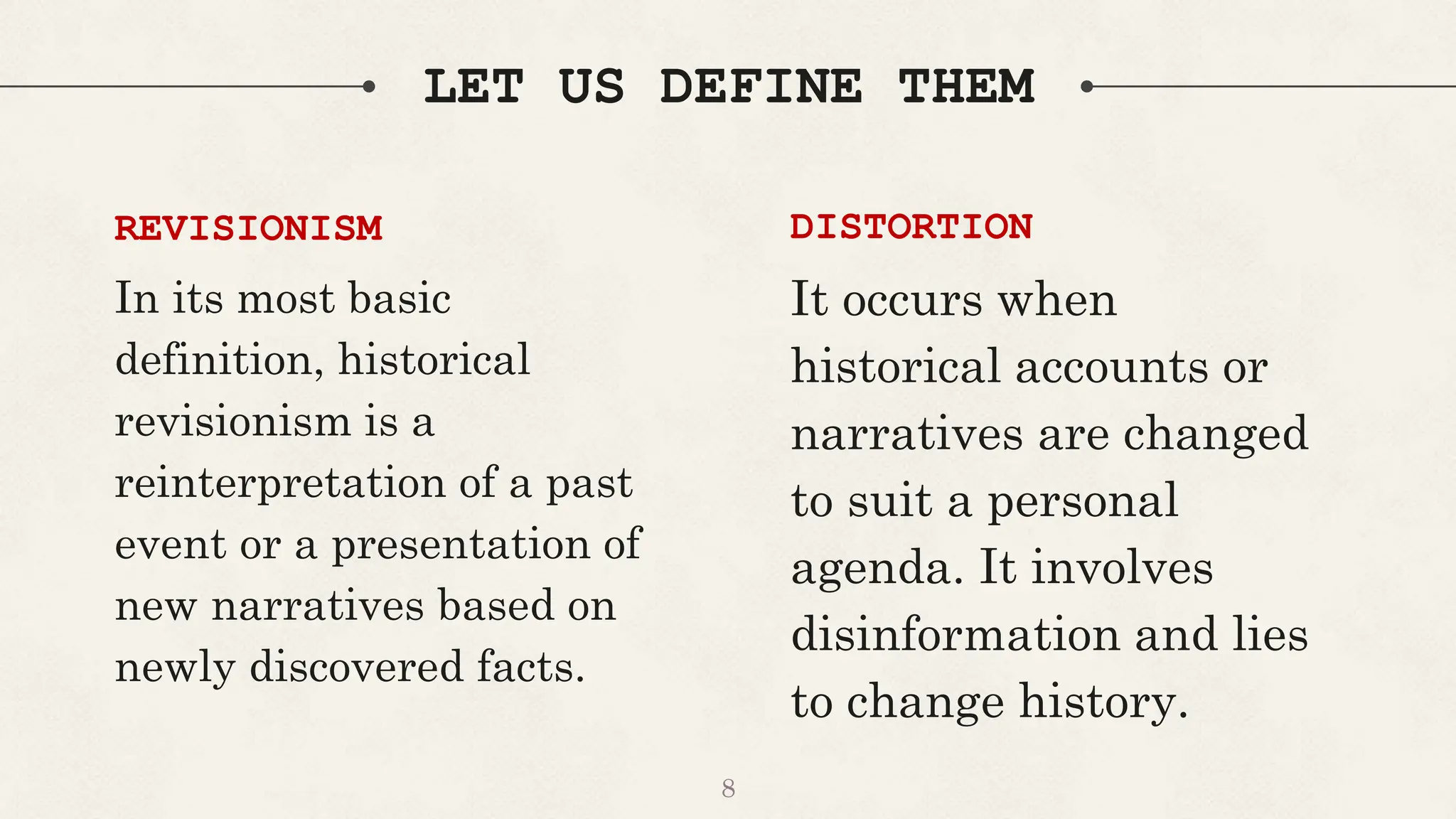
In Devy’s framework, “mindless erasure” is not accidental forgetting but a deliberate political strategy to reconstruct national identity by purging historical complexity. It operates through:
- Historical excision: Removing inconvenient epochs (e.g., Mughal, colonial) from national memory.
- Linguistic homogenization: Promoting Hindi as a national lingua franca while marginalizing other languages.
- Genetic myth-making: Propagating narratives of “indigenous purity” vs. “foreign invasion.”
Devy confronts this not as a cultural debate but as an epistemological crisis—one that demands rigorous historical, genetic, and linguistic counter-evidence.
2. Deconstructing the “Golden Age–Decline” Historical Model
2.1 The Revisionist Narrative
A core tenet of contemporary Hindu nationalist historiography posits:
- Ancient Glory: A pristine, Vedic-Hindu “golden age.”
- Medieval Decline: An era of “foreign” (Islamic) conquest and cultural degeneration.
- Modern Reclamation: A national revival seeking to restore ancient purity.
This model necessitates the erasure of Mughal and Sultanate contributions—evident symbolically in the new Parliament building’s exclusion of Mughal history while featuring “Akhand Bharat” and Chanakya imagery.
2.2 Devy’s Counter-Argument: The Age of Synthesis
Devy offers a material and cultural rebuttal:
- Linguistic Evidence: The very languages central to modern Indian identity—Hindi, Bengali, Marathi, Gujarati, Punjabi—achieved their literary maturity and standardization during the medieval period under Persianate and vernacular cultural synthesis. To erase this period is to erase the genesis of these languages.
- Architectural & Administrative Synthesis: Mughal and regional Sultanate administrations created hybrid legal, revenue, and artistic forms that shaped modern India’s bureaucratic and aesthetic imagination.
- Rejection of “Dark Age” Rhetoric: Devy argues that labeling any period “dark” is anti-historical. History comprises “triumphs and tragedies”; scholarship must account for both without ideological cleansing.
“It is not a systematic erasure, it is a mindless erasure… It is a very non-scientific view of history.” – Devy
3. Debunking the Myth of Purity: Genetics, Migration, and “Original Inhabitants”
3.1 The Purity Paradigm
Revisionist politics often invokes a binary of “original inhabitant” (indigenous) vs. “invader/migrant” (foreign)—applied to communities, religions, and languages.
3.2 Devy’s Genetic-Historical Refutation
Citing recent population genetics (compatible with findings of scholars like David Reich and the “Out of Africa” migration), Devy dismantles this binary:
- All Indians are migrants: Modern humans arrived in the subcontinent ~65,000 years ago. Multiple subsequent migration waves (Indo-Aryan, Iranian, Central Asian) added to the genetic mosaic.
- The Maternal Lineage Commonality: Genetic studies show mitochondrial DNA (mtDNA) lineages are largely shared across ethnic and religious groups—indicating deep common ancestry among Indian populations.
- The Paternal Lineage Diversity: Y-chromosome data shows greater diversity, indicating historically male-dominated migration and admixture.
“Our mothers come from the same stock, but our fathers in the past came from different stocks… It is impossible to say who is the original and who is the migrant.” – Devy
Thus, claims of “pure blood” or “original stock” are genetically incoherent. Every Indian community is the product of layered migrations and synthesis.
4. The Weaponization of Language: Hindi vs. The Federal Compact
4.1 The Politics of Hindi Imposition
Devy analyzes the push for Hindi as a national lingua franca not as a linguistic issue but as a political strategy of majoritarian consolidation.
- Demographic Weaponization: With ~40% speakers (a number inflated by subsuming languages like Bhojpuri), Hindi is positioned as the “majority” language against a constructed coalition of “minority” southern and eastern languages.
- Electoral Logic: This creates a political binary (Hindi vs. the rest) useful for electoral mobilization.
- Resistance as “Anti-National”: Opposition to Hindi imposition (especially strong in Tamil Nadu) is framed as divisive, undermining the revisionist goal of cultural homogenization.
4.2 Devy’s Federal and Civilizational Counterpoint
- Tamil as Global Heritage: Devy re-frames Tamil not as a “regional” language but as one of the world’s oldest living classical languages (with Arabic and Mandarin), a “heritage of the world.” This elevates it beyond the majoritarian/minoritarian dialectic.
- Constitutional Vision: India’s founding compact, as Devy reads it, is federal and pluralistic. The “Union of States” implies a coalition of regional linguistic cultures, not a unitary Hindi-centric state.
- The Danger of Unitarism: Imposing linguistic homogeneity “slows down the evolutionary process” of Indian civilization, which thrives on cross-linguistic fertilization and diversity.
5. The Silencing of Dissent: Contextualizing Rationalist Murders
Devy’s personal activism—his return of the Sahitya Akademi Award and move to Dharwad—is a direct response to the physical silencing of dissent. The murders of rationalists like Dr. M. M. Kalburgi, Narendra Dabholkar, and Govind Pansare represent the violent extreme of the “erasure” project.
These thinkers were targeted for:
- Challenging superstition (Dabholkar)
- Critiquing idol worship and orthodoxy (Kalburgi)
- Advocating for Leftist, inclusive politics (Pansare)
Devy interprets these acts as attempts to erase not just individuals but entire streams of thought—rationalist, reformist, and pluralist—that complicate the purist narrative.
6. Theoretical Synthesis: Pluralism as Civilizational Resilience
Devy’s opposition to “mindless erasure” rests on a positive civilizational thesis: India’s genius is synthesis, not purity.
- Historical Identity: India’s past is a palimpsest—Vedic, Buddhist, Jain, Islamic, Sikh, Christian, and tribal layers coexist and interpenetrate.
- Linguistic Identity: India is a “linguistic civilization” where multiple language families (Indo-Aryan, Dravidian, Austroasiatic, Tibeto-Burman) interact.
- Political Identity: India’s stability relies on constitutional federalism, which protects regional autonomies against centralizing homogenization.
Erasure attacks this syncretic core, threatening to replace a resilient, complex identity with a brittle, monolithic one.
7. Research Implications and Critical Questions
7.1 Contributions to Scholarship
- Interdisciplinary Counter-Narrative: Devy bridges genetics, linguistics, history, and political theory to challenge revisionism empirically.
- From Activism to Theory: His work (PLSI, advocacy) provides a praxis-oriented model for resisting epistemic violence.
- Federalism Revisited: He reinvigorates the “linguistic states” principle as a bulwark against cultural nationalism.
7.2 Questions for Further Research
- How do subaltern oral histories and tribal cosmologies further complicate the “purity” narrative?
- To what extent do Devy’s arguments align with or differ from Subaltern Studies and postcolonial critiques of nationalism?
- Can the “synthesis” model account adequately for histories of caste violence and exclusion, which also shape Indian society?
8. Conclusion: Defending the “Unfinished Palette”
Ganesh Devy’s work stands as a formidable scholarly and activist challenge to the politics of historical and linguistic purification. By demonstrating that Indian civilization is genetically hybrid, historically layered, and linguistically plural, he provides the evidentiary base for a politics of inclusive citizenship.
“Mindless erasure” seeks to reduce a civilization of confluence to a monochrome fable. Devy’s life’s work is a testament to the ethical and intellectual imperative of defending the unfinished, vibrant, and irreducibly plural palette of Indian history.
References (Source-Based)
- Devy, G.N. (2025). Language, Civilization and Hegemony. Nehru Memorial Lecture.
- Devy, G.N. (Interview, 2023). The Federal – On historical erasure and linguistic politics.
- Devy, G.N. (Interview, 2022). The Gyaan Project – On language death and diversity.
- People’s Linguistic Survey of India (Volumes). Bhasha Research Centre.
- Genetic studies referenced in Devy’s talks align with: Reich, D. et al. (2009). “Reconstructing Indian Population History.” Nature.
- Context: Assassinations of Kalburgi (2015), Dabholkar (2013), Pansare (2015).
Research Utility: This analysis is geared toward scholars in political science, contemporary history, sociolinguistics, nationalism studies, and South Asian studies. It offers a framework for deconstructing revisionist populism with interdisciplinary evidence.
Comments (Write a comment)
Showing comments related to this blog.