Eco-Friendly
Technology and Sustainable Living
Introduction
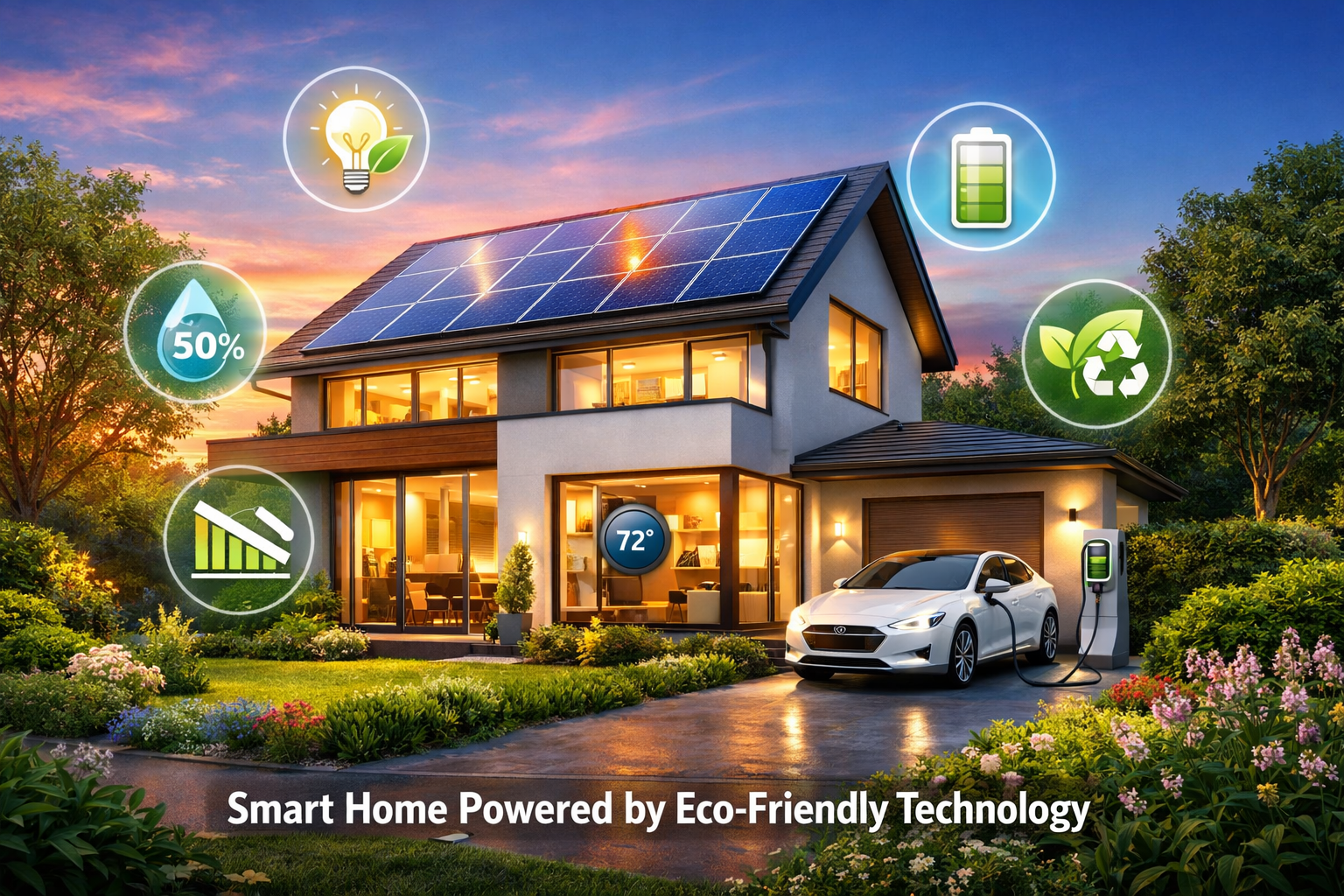
Climate change demands immediate action, and eco-friendly technology combined with sustainable living offers a practical path forward. In 2026, renewable power is projected to overtake coal as the world’s largest electricity source, with solar and wind driving massive growth. The global green technology and sustainability market is exploding—from $25.47 billion in 2025 to $73.9 billion by 2030 at a 23.7% CAGR—showing clear momentum.
Digital technologies could cut global carbon emissions by up to 20% by 2050, while smart homes and circular solutions make everyday life more efficient and less wasteful. This guide explores the latest eco-friendly technology innovations, their real-world impact on sustainable living, practical tips you can use today, and the data-backed benefits for your home, wallet, and planet. Whether you’re a homeowner, business leader, or eco-conscious consumer, you’ll find clear strategies to reduce your footprint without sacrificing comfort or convenience.
Understanding Eco-Friendly Technology
Eco-friendly technology (also called green tech or clean tech) refers to innovations designed to minimize environmental harm while maximizing efficiency. It includes renewable energy systems, energy-efficient appliances, smart sensors, and circular economy tools that reduce waste and emissions.
Unlike traditional methods that rely on fossil fuels and linear “take-make-dispose” models, eco-friendly technology prioritizes renewables, resource conservation, and low-carbon operations. LSI terms like green technology, sustainable tech, and low-emission solutions appear throughout this space. Examples range from solar panels and EV chargers to AI-powered energy managers that optimize home usage in real time.
Why Sustainable Living Matters in 2026
Sustainable living means making daily choices that reduce resource consumption and environmental impact. In 2026, it’s no longer optional—it’s essential. Global material footprint has grown 70% since 2000, and one-third of food produced is wasted, costing $1 trillion yearly.
Renewable energy now accounts for nearly 30% of global electricity (up from 20% in 2010), and IEA forecasts show renewables becoming the top power source by 2026 at 36% of supply versus coal at 32%. Consumer demand is surging: 78% of people say sustainability matters, and sustainable products grow 2.7× faster than conventional ones. Adopting eco-friendly technology for sustainable living helps cut household emissions, lower utility bills, and build resilience against climate risks.
Key Eco-Friendly Technologies Transforming Daily Life
Several breakthroughs make sustainable living accessible:
AI and IoT for Resource Management: Sensors track energy, water, and waste in real time.
Energy Storage and Batteries: Costs have dropped dramatically, enabling homes to store solar power.
Smart Appliances and Devices: These automatically optimize usage for efficiency.
Internal linking suggestion: See the smart homes section below for implementation details.
External linking suggestion: Learn more from the IEA Renewables 2025 report.
Smart Homes: The Heart of Energy-Efficient Living
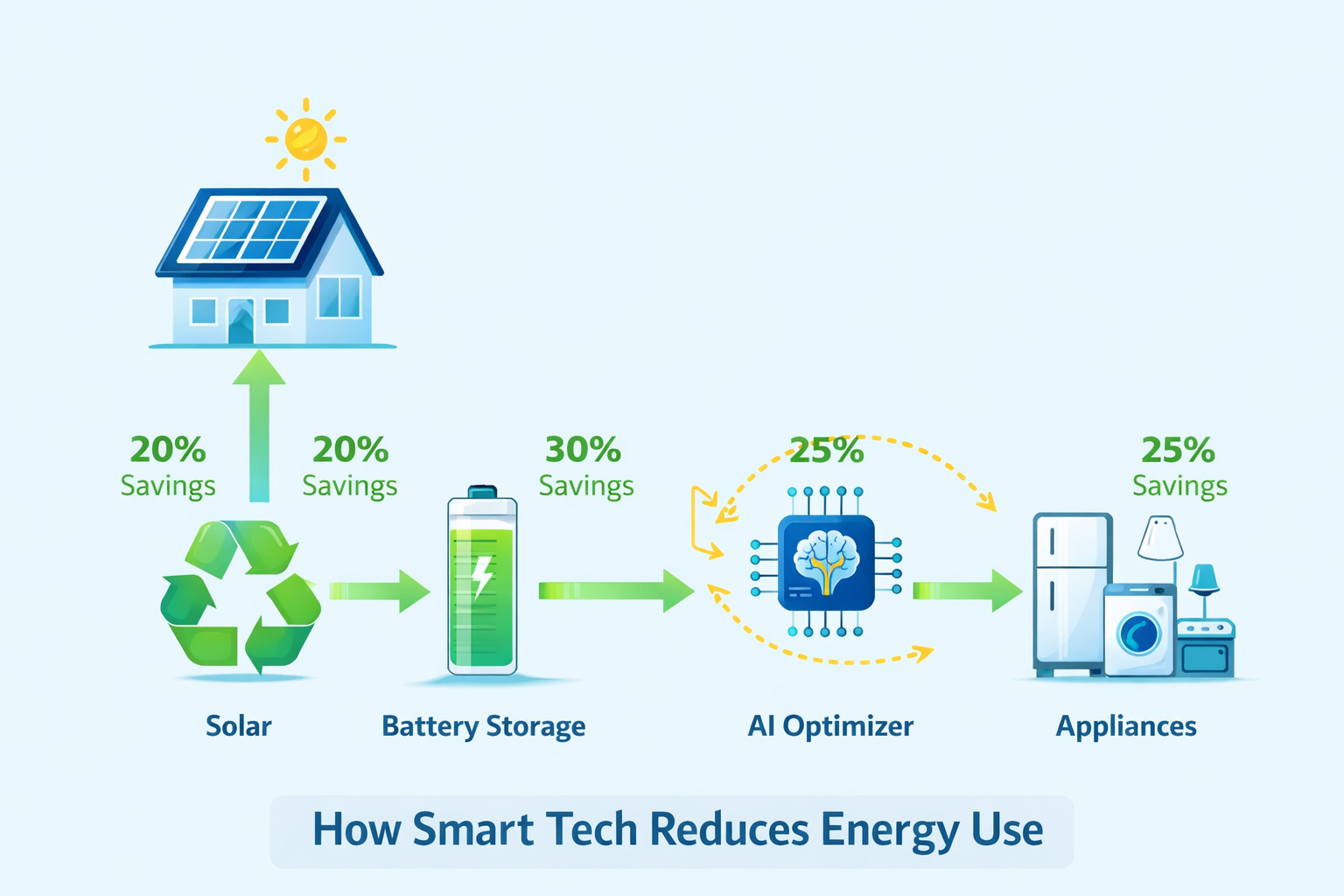
Smart home technology is booming, with the global market projected to grow from $147.52 billion in 2025 to $848.47 billion by 2034 (CAGR 21.4%). AI-powered thermostats, lighting, and appliances can cut energy use by up to 30%.
Real-world example: Homes with integrated energy monitoring reduce consumption through automated adjustments. Features like real-time energy tracking and water monitoring top consumer wish lists.
Renewable Energy Solutions for Homes and Communities
Solar PV dominates growth, with global renewable capacity expected to add 4,600 GW between 2025 and 2030—double the previous five-year period. Home solar systems paired with battery storage let families generate and store clean power.
Community solar projects and microgrids extend benefits to apartments and neighborhoods. Electric vehicles (EVs) and smart charging further integrate transport with home energy systems.
Circular Economy Tech and Waste Reduction
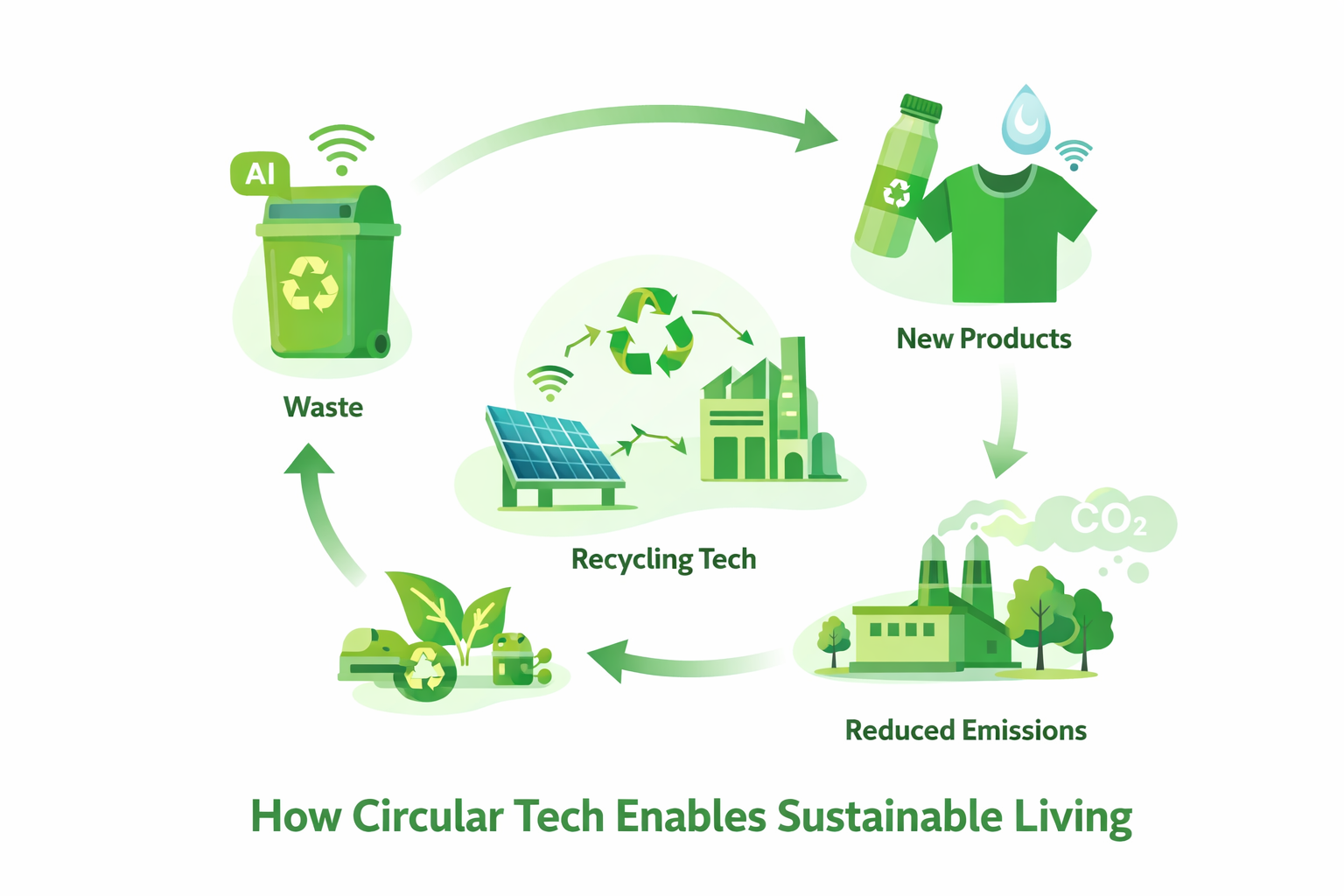
The circular economy market is projected to reach $712 billion by 2026. Tech like smart recycling bins with AI sorting, biodegradable materials, and product-as-a-service models (e.g., modular phones) keep resources in use longer. Apps track personal carbon footprints, while blockchain verifies sustainable supply chains.
Benefits of Eco-Friendly Technology for Sustainable Living
Environmental Benefits
- Lower carbon footprint
- Reduced pollution
- Conservation of natural resources
Economic Benefits
- Lower energy bills
- Long-term cost savings
- Job creation in green industries
Social Benefits
- Improved health
- Better quality of life
- Increased environmental awareness
- Digital tools alone could slash global carbon emissions by 20% by 2050. Sustainable products now hold 17% market share and drive 32% of market growth.
Actionable Tips to Start Your Green Journey
- Audit your home energy use with a smart meter.
- Install LED lighting and smart thermostats—savings up to 30%.
- Switch to renewable energy plans or add solar panels.
- Adopt zero-waste habits with apps that track consumption.
- Choose ENERGY STAR or equivalent certified appliances.
- Support circular brands that offer repair or recycling programs.
Start small: one change per month compounds into major impact.
Challenges and the Road Ahead
Despite its advantages, eco-friendly technology faces challenges:
- High initial costs
- Limited infrastructure in some regions
- Lack of awareness
- Technological limitations
However, costs are decreasing as technology improves.
Future Trends in Green Technology
AI-driven ESG reporting, advanced battery tech, regenerative design, and water conservation tools will dominate. By 2030, green tech could add trillions to global GDP while meeting climate goals.
Conclusion
Eco-friendly technology and sustainable living are no longer optional—they are essential. As environmental challenges grow, adopting greener solutions becomes more important than ever.
The good news? You don’t need to make drastic changes overnight. Small, consistent steps—like using energy-efficient devices or reducing waste—can make a big difference.
By embracing eco-friendly technology, you not only help the planet but also improve your quality of life. The future is green—and it starts with you. 🌱