America's Hidden Horrors: A State-by-State Guide to U.S. Cryptids
Forget Bigfoot. Your State Has Its Own Monster
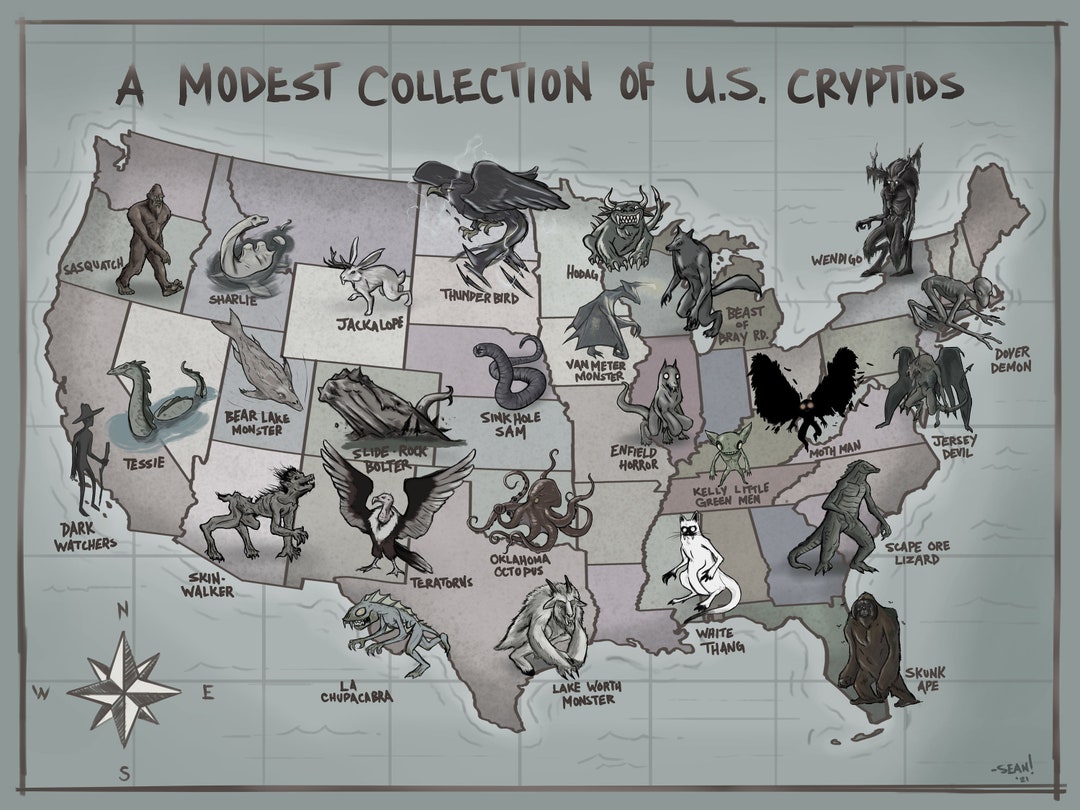
Introduction: The Monster in Your Own Backyard
When we think of American cryptids, the mind jumps to the Pacific Northwest's Sasquatch or West Virginia's Mothman. But these are just the celebrities in a vast, shadowy ecosystem of regional terror. From the swamps of Louisiana to the deserts of Arizona, every corner of the United States harbors its own unique nightmare, born from local history, geography, and collective anxiety.
This is not merely a catalog of creatures; it's a map of American fear. These beings are more than just stories—they are environmental guardians, historical warnings, and manifestations of the specific, dark unknowns that haunt each landscape. Forget remote wilderness; some of these horrors lurk in suburban woods, at the end of rural roads, and under the bridges of your own hometown.
Let's embark on a state-by-state tour of America's hidden horrors.
The Regional Archetypes: Classifying the Nightmares
Before diving into the list, we can categorize these cryptids into broader American archetypes:
- The Hairy Humanoid: The Sasquatch family tree, encompassing regional variations in size, smell, and temperament.
- The Aquatic Enigma: Lake monsters, river serpents, and swamp things that rule the inland waterways.
- The Winged Terror: Bats, birds, and devilish hybrids that patrol the skies.
- The Folkloric Shapeshifter: Entities rooted in Indigenous and immigrant lore, often with moral lessons attached.
- The Bizarre & Uncanny: Creatures of pure, surreal dread that defy easy classification.
The State-by-State Cryptid Census (Highlights of Horror)
The Northeast: Old Woods and Older Spirits
- New Jersey: The Jersey Devil
- Description: The archetypal winged terror. A bipedal goat-like creature with a horse's head, bat wings, and a piercing scream. Born from a 1735 curse in the Pine Barrens.
- Why It Fits: The Pine Barrens are a vast, impenetrable wilderness in one of America's most densely populated states. The Devil represents the untamable, ancient wild that persists just beyond the suburbs.
- Pennsylvania: The Squonk (Lacrimacorpus dissolvens)
- Description: A profoundly melancholic, pig-like creature with ill-fitting, warty skin. It weeps constantly and can dissolve into a pool of its own tears when cornered.
- Why It Fits: A cryptid of pure pathos from a state with a hardscrabble industrial history. The Squonk embodies depression and the desire to simply disappear from the pressures of the world.
- New Hampshire: The Wood Devils
- Description: Tall, slender, shaggy-haired relatives of Bigfoot. Their oddest trait: if caught in the open, they freeze and stare rather than hide.
- Why It Fits: In the stoic, reserved culture of New England, even monsters practice a form of quiet, unsettling observation.
The South: Swamps, Souls, and Shape-Shifters
- Louisiana: The Feu Follet
- Description: A wandering, dim ball of light (will-o'-the-wisp) over the swamps, said to be the soul of a cursed blacksmith trying to lure travelers to a watery grave.
- Why It Fits: In a land defined by water, mist, and deep Catholic and Voodoo spirituality, the horror isn't always a creature—it's a lost soul, a spectral trap in the literal and metaphorical fog.
- Kentucky: The Pope Lick Goatman
- Description: A human-goat hybrid wielding a blood-stained axe, said to lurk under a railway trestle. It uses hypnosis or voice mimicry to lure victims onto the tracks.
- Why It Fits: A classic "troll under the bridge" tale fused with the sinister Appalachian motif of mimicry. It preys on trust and curiosity, turning community values against themselves.
- Florida: The Skunk Ape
- Description: Florida's answer to Bigfoot, but shorter, stockier, and notoriously foul-smelling—a mix of skunk, methane, and decay.
- Why It Fits: Perfect for Florida's unique ecology. The smell ties it to the state's sulfurous swamps and rotting vegetation. It’s a survivor in one of the most brutally competitive ecosystems in the U.S.
The Midwest: Lake Beasts and Prairie Phantoms
- Michigan: The Michigan Dogman
- Description: A 7-foot-tall, blue or amber-eyed bipedal canine with a haunting, human-like scream. Said to appear in 10-year cycles ending in the number 7.
- Why It Fits: In a state obsessed with werewolf lore (see The Howling in the Upper Peninsula), the Dogman is a more bestial, permanent version. Its cyclical nature gives it the predictability of a natural phenomenon, making it even eerier.
- Minnesota: The Wendigo
- Description: While Algonquian in origin, the Wendigo is fiercely associated with Minnesota's north woods. A gaunt, skeletal giant with a heart of ice, symbolizing insatiable greed, cannibalism, and the consuming cold.
- Why It Fits: It is the perfect monster for a region defined by harsh, isolating winters. The Wendigo isn't just a creature; it's the psychological unraveling that extreme environment and scarcity can cause.
- Iowa: The Van Meter Visitor
- Description: A bat-like, pterodactylian creature with a horned head that shot beams of light, seen in 1903. It was said to be bulletproof and fled into a coal mine.
- Why It Fits: A perfect "Gilded Age" cryptid. Its mechanical description (light beams, invulnerability) reflects the era's tension between frontier superstition and explosive industrial technology.
The Southwest: Desert Dwellers and Ancient Spirits
- Arizona: The Mogollon Monster
- Description: Arizona's red-eyed, foul-smelling Bigfoot variant. Notably violent and territorial, with a blood-curdling scream.
- Why It Fits: The harsh, arid landscape of the Mogollon Rim breeds a harder, more aggressive survivor. This isn't a shy forest giant; it's a desert demon that claims its territory with fury.
- New Mexico: The Teratorn / Thunderbird
- Description: While the Teratorn was a real, car-sized prehistoric bird, its legend lives on in Southwestern "Thunderbird" sightings—massive avian creatures whose wings flap with the sound of thunder.
- Why It Fits: In the vast, open skies of the Southwest, it feels plausible that a creature of ancient, majestic scale could still ride the thermals, a living relic from the age of giants.
- Texas: The Donkey Lady
- Description: A bridge-haunting spirit of a woman disfigured in a fire, now with a donkey-like face. She attacks those who trespass on her bridge.
- Why It Fits: A classic tragic-vengeance ghost story, Texan-style. It combines the state's love of folklore (La Llorona variants) with a very local, specific haunting tied to a tangible landmark.
The West & Pacific: Mountain Giants and Cosmic Oddities
- California: The Dark Watchers (Los Vigilantes Oscuros)
- Description: Featureless, tall, shadowy silhouettes wearing brimmed hats, seen along ridgelines at dusk. They only observe.
- Why It Fits: In a state of eternal newcomers and seekers, the Watchers are the opposite: ancient, silent, and immovable. They represent the land itself, watching the fleeting dramas of humanity with detached, timeless indifference.
- Washington: The Batsquatch
- Description: Exactly what it sounds like: a winged, purple-furred hybrid of Bat and Sasquatch, reportedly seen near Mount St. Helens after its 1980 eruption.
- Why It Fits: A uniquely Pacific Northwest blend of high strangeness. The volcanic activity tie-in suggests a creature of chaos, mutated or unleashed by geologic upheaval—a cryptid for the Age of Paranoia.
- Alaska: The Tizheruk
- Description: A fast-moving, snake-like sea creature with a flippered tail and a head like a seal or a dog, said to snatch people from docks.
- Why It Fits: In a state where the ocean is both lifeline and deadly force, the Tizheruk is the predatory embodiment of the cold, dark, unforgiving Arctic sea.
Analysis: What Do America's Monsters Tell Us?
- Geography is Destiny: Swamps create will-o’-the-wisps and reptilian monsters. Vast forests breed giant humanoids. Isolated mountains and lakes harbor prehistoric survivors. The land shapes the legend.
- History Haunts: The Wendigo reflects Indigenous winter trauma. The Donkey Lady and other "bridge trolls" often stem from local tragedies. The Van Meter Visitor mirrors industrial anxiety. Cryptids are folklore scars.
- The Fear of the "Other" at Home: Many cryptids—from Goatman to Skinwalkers—are shapeshifters or mimics. In a nation of immigrants and cultural clash, the fear that your neighbor, or even your own family, might not be what they seem is a potent source of horror.
- The Need for Wilderness: Even in the 21st century, Americans cling to the idea that true wilderness—and the monsters that represent its untamed spirit—still exists just beyond the city limits. Cryptids validate our longing for a world not fully conquered.
Conclusion: Your Local Legend Awaits
This guide is merely a starting point. America's cryptozoological tapestry is endlessly deep, with countless local variations, forgotten tales, and new sightings every year. The monster map is never complete.
The true horror and wonder of American cryptids lie in their specificity. They are not generic global ghosts. They are the White Thang of Alabama, the Slide-Rock Bolter of Colorado, the Melon Heads of Connecticut. They belong to a place. They are woven into the local soil, water, and memory.
So, the next time you hear a strange sound in the woods of your home state, don't just think "Bigfoot." Look deeper. You might be facing something older, stranger, and far more intimately tied to the ground beneath your feet. The hidden horror isn't just in America; it's in your America.
Challenge: Research the cryptid lore of your own county or region. You'll likely find a story—a haunted bridge, a monster in a local lake, a creature seen in a now-subdivided wood. That connection, between the myth and your own map, is where cryptozoology becomes truly alive.
Comments (Write a comment)
Showing comments related to this blog.