The Psychiatrist's Map of Evil: Dr. M. Scott Peck's Six Stages of Possession
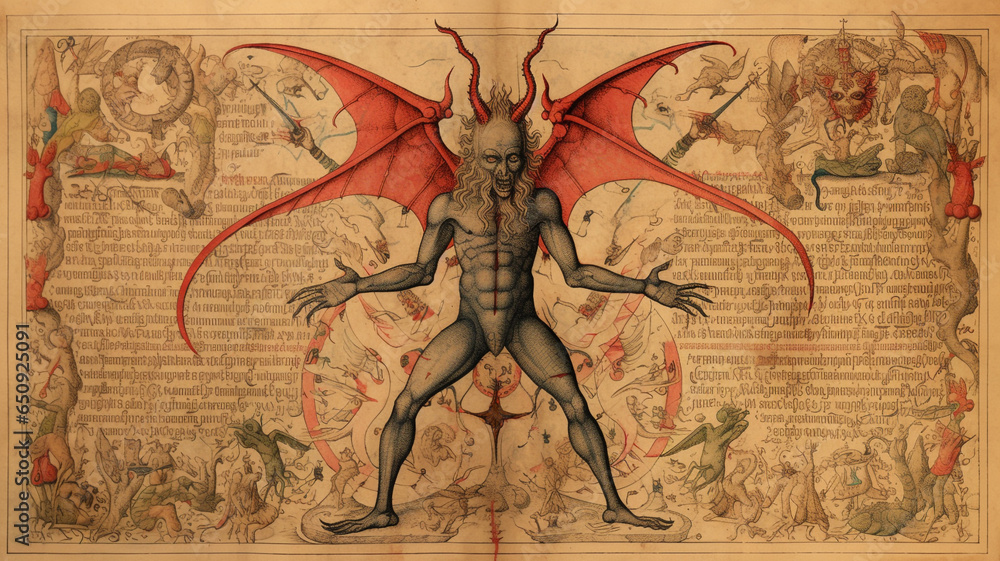
Dr. M. Scott Peck, a respected, Harvard-educated psychiatrist and best-selling author of The Road Less Traveled, approached the concept of demonic possession with extreme caution and a scientist's rigor. After decades of practice and ruling out every known psychiatric and medical diagnosis in a handful of rare cases, he reluctantly allowed himself to join clergy in performing exorcisms.
To make sense of the horrifying phenomena he witnessed, Dr. Peck leaned on a model of possession that he adapted, partly from Catholic exorcists, including the controversial Malachi Martin. He described this process as unfolding in six distinct stages:
Stage 1: Presence
The journey into possession begins with the subtle yet unsettling feeling that something alien has revealed itself.
- The patient may hint at an outside voice or a foreign entity.
- This stage is the initial point where an other seems to manifest within the individual's experience.
Stage 2: Pretense
In this stage, the entity attempts to hide, fake, or imitate. This is a strategic phase where the goal is to mislead the clinicians and clergy.
- It may pretend to be a normal psychiatric symptom (like psychosis or dissociation).
- It might even impersonate another voice or an aspect of the patient's personality.
- Peck's rigorous process of ruling out all natural causes (like depression, schizophrenia, and epilepsy) was designed specifically to defeat this stage of pretense.
Stage 3: Breakpoint
The mask begins to crack. The presence can no longer fully maintain its disguise as a typical illness.
- A hostile voice or bizarre, defiant behavior emerges more openly.
- The entity often begins mocking or taunting the exorcists and the medical team.
Stage 4: Voice
This is the stage of direct communication where the entity identifies itself.
- The presence may name itself (like "Damian" in the case of "Jersey").
- It often makes threats or claims of ownership over the possessed individual.
- The speech is frequently profane, contemptuous, and unsettlingly coherent. This shift is critical, as the content often goes beyond what standard psychosis can explain.
Stage 5: Clash
The ritual moves into a direct confrontation—the most violent and exhausting phase of the process.
- The prayers of the exorcists and the commands of the ritual battle directly against the defiance of the presence.
- During this phase, physical manifestations like convulsions, guttural taunts, and violence may occur.
- In one tragic case, "Becca," the presence claimed, "I am owned. I have been owned for 40 years, and you cannot touch me".
Stage 6: Expulsion
This is the goal of a successful exorcism.
- The presence breaks, retreats, and the patient collapses into exhaustion.
- In rare, successful cases, the relief is described as immediate and lasting, with the patient feeling "lighter" and "free".
- Dr. Peck believed the case of his patient "Jersey" reached this stage, resulting in liberation. However, the case of "Becca" stalled out, leaving her without liberation and making her one of the most tragic cases of his career.
Dr. Peck emphasized that his work was not proof, but rather a clinical testimony of things he simply couldn't explain using medicine. He saw true possession as exceptionally rare, but his structured, scientific approach to the demonic made the possibility difficult to ignore.
Would you like to know more about the two cases, Jersey and Becca, that Dr. Peck detailed in his book?
Comments (Write a comment)
Showing comments related to this blog.