The Charisma Pattern: How to Use Voice, Pace & Melody to Hold Any Room
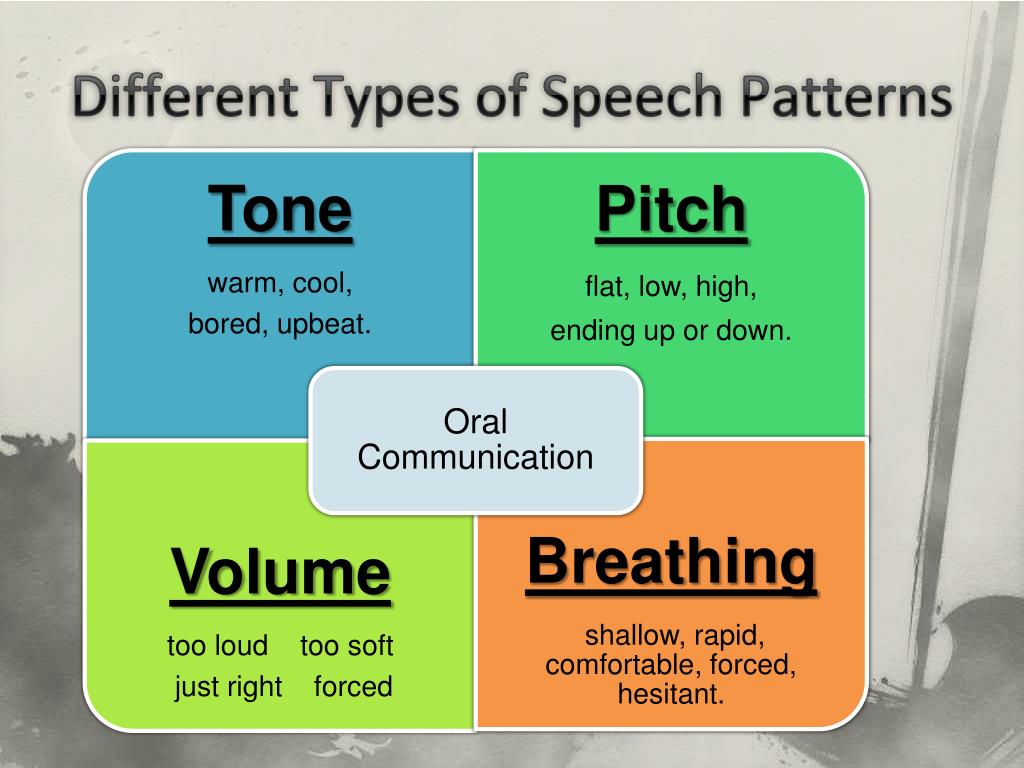
The charisma pattern in public speaking refers to the deliberate orchestration of vocal dynamics—pitch, pace, volume, melody, and rhythm—to create magnetic presence and sustain audience attention. Far from being an innate gift reserved for a select few, this pattern emerges as a learnable skill set that transforms ordinary delivery into captivating communication. Expert speakers consistently demonstrate that mastery of voice and prosody can compensate for content weaknesses, while poor vocal control can undermine even the strongest material. This article examines the core components of the charisma pattern, drawing on practical techniques employed by accomplished orators, and explains how intentional variation in vocal delivery generates emotional resonance, trust, and influence.
Background: Why Vocal Delivery Outweighs Content in Perceived Charisma
Audience perception of a speaker’s competence, trustworthiness, and likability is disproportionately shaped by how something is said rather than what is said. Research in nonverbal communication and vocal prosody consistently shows that vocal cues account for a substantial portion of emotional impact and credibility judgments—often estimated between 38% and 84% depending on context and study design.
The human auditory system is exquisitely sensitive to subtle changes in pitch, tempo, volume, and intonation. These variations serve as evolutionary signals of emotional state, intention, and social dominance. Monotone delivery triggers boredom and disengagement because it deprives the brain of the dynamic cues it expects in natural human interaction. Conversely, purposeful modulation mimics the prosodic patterns found in emotionally engaging conversation, storytelling, and persuasive rhetoric.
Two fundamental principles underpin the charisma pattern:
- Contrast creates attention — The brain habituates quickly to unchanging stimuli. Sudden shifts in pace, volume, or pitch re-engage attention.
- Emotional congruence builds connection — Vocal melody that matches the semantic content (rising inflection for excitement, descending for authority, slower pace for gravity) produces stronger emotional resonance and perceived authenticity.
Current Findings: Core Elements of the Charisma Pattern
Effective speakers employ a small set of vocal techniques that combine into what can be termed the charisma pattern. These elements appear repeatedly across master communicators and are teachable through conscious practice.
1. Vocal Range and Melody (The Musicality of Speech)
Speech melody—also called intonation contour—refers to the rise and fall of pitch across phrases. Charismatic speakers avoid monotone delivery by utilizing a wider pitch range and deliberate melodic patterns.
- Ascending melodies (rising pitch) signal excitement, curiosity, or invitation (“Imagine what becomes possible when…”).
- Descending melodies (falling pitch) convey authority, finality, and confidence (“This is the truth we must face.”).
- Stairway-to-heaven pattern: A gradual, stepwise rise in pitch across a sentence or paragraph creates anticipation and emotional lift, frequently used to build toward a key point.
2. Pace Variation and Strategic Pausing
Pace (words per minute) is one of the most underutilized levers of influence. Rapid speech signals nervousness or low status; excessively slow speech can bore. Charismatic delivery features purposeful variation:
- Accelerate during exciting or familiar sections to convey energy.
- Decelerate dramatically on important statements to give weight and allow processing time.
- Use strategic silence (3–7 seconds) after powerful statements or questions to let ideas land.
3. Volume Dynamics and Emphasis
Volume contrast creates drama and directs attention. Speakers who remain at a constant loudness lose impact. Effective patterns include:
- Starting at moderate volume and gradually building.
- Dropping to a near-whisper for confidential or intimate moments.
- Sudden volume increases to punctuate key assertions.
4. Matching Representational Systems (Visual, Auditory, Kinesthetic Language)
Many charismatic speakers unconsciously or deliberately match their vocal tone to the audience’s preferred sensory system:
- Visual learners respond to brighter, higher, more melodic tones (“See the future clearly…”).
- Auditory learners connect with rhythmic, resonant delivery (“Listen to what this really means…”).
- Kinesthetic learners engage with slower, deeper, more grounded speech (“Feel the weight of this decision…”).
Table 1: Vocal Charisma Pattern Components and Their Effects
Component | Technique Examples | Primary Psychological Effect | Typical Use Case |
Melody / Intonation | Ascending, descending, stairway patterns | Builds anticipation or authority | Climactic moments, key revelations |
Pace Variation | Accelerate → slow dramatically | Controls emotional rhythm | Excitement → gravity shift |
Strategic Pausing | 3–7 second silence after strong statement | Increases perceived confidence & impact | After questions, powerful claims |
Volume Dynamics | Whisper → crescendo → sudden drop | Directs attention, creates drama | Confidential revelation → bold assertion |
Pitch Range | Wide variation vs monotone | Prevents habituation, signals emotional range | Sustaining attention across 20+ minutes |
Analysis & Implications
The charisma pattern works because it exploits fundamental properties of human attention and emotional processing. Dynamic vocal delivery prevents habituation (the brain’s tendency to tune out unchanging stimuli) and activates the same neural networks involved in processing genuine emotional communication.
A notable point of agreement across sources is the importance of deep breathing as the foundation of vocal control. Full diaphragmatic breathing not only calms the nervous system (reducing shaky voice and filler words) but also provides the physical capacity for sustained volume, lower pitch, and longer phrases—hallmarks of authoritative delivery.
Contradictions appear regarding naturalness versus technique. Some argue that over-conscious application can sound contrived, while others maintain that deliberate practice eventually makes dynamic vocal patterns feel authentic. The resolution appears to lie in over-learning: when techniques are rehearsed to automaticity, they integrate seamlessly into natural expression.
Figure 1: The Vocal Charisma Impact Curve (Conceptual plot showing audience attention level over time)
- Flat line = monotone delivery (rapid attention decay)
- Moderate waves = basic variation (sustained but limited engagement)
- High-amplitude, rhythmic waves = full charisma pattern (sustained high attention with emotional peaks)
The curve illustrates that small, consistent vocal contrasts produce disproportionately large gains in retention and emotional connection.
Conclusion & Future Directions
The charisma pattern—deliberate modulation of pitch, pace, volume, melody, and strategic silence—represents a learnable system for commanding attention and generating emotional influence. Far from requiring innate talent, it emerges from conscious practice of contrast, congruence, and physiological self-regulation.
Speakers who master these vocal tools report reduced anxiety, stronger audience connection, and greater persuasive impact. The pattern’s effectiveness lies in its alignment with how the human brain naturally processes emotional and social information.
Future investigation could explore quantitative correlations between specific prosodic patterns and real-time audience engagement metrics (heart-rate variability, galvanic skin response, EEG synchrony). For practitioners, however, the implication is immediate: vocal delivery is not decoration—it is the primary vehicle through which ideas gain power and presence.
Comments (Write a comment)
Showing comments related to this blog.