Fallen Angels or Nephilim Spirits? The Contested Origins of Demons in Abrahamic Faith
An In-Depth Theological Investigation
Introduction: The Biblical Silence and the Need for an Answer
Within the pages of the canonical Hebrew Bible and New Testament, demons are present—they are cast out by Jesus, they cause sickness, they speak through possessed individuals. Yet, the Bible is curiously silent on one fundamental question: What is the ontological origin of these evil spirits?
This lack of a definitive, in-scripture explanation created a theological vacuum. Over centuries, Jewish and Christian scholars, drawing on canonical hints, apocryphal texts, and oral tradition, constructed two primary—and often conflicting—origin stories. The debate is not merely academic; it shapes the very nature of evil, the scope of God's plan, and the relationship between humanity and the infernal.
Theory 1: The Fallen Angels – Rebellion in Heaven
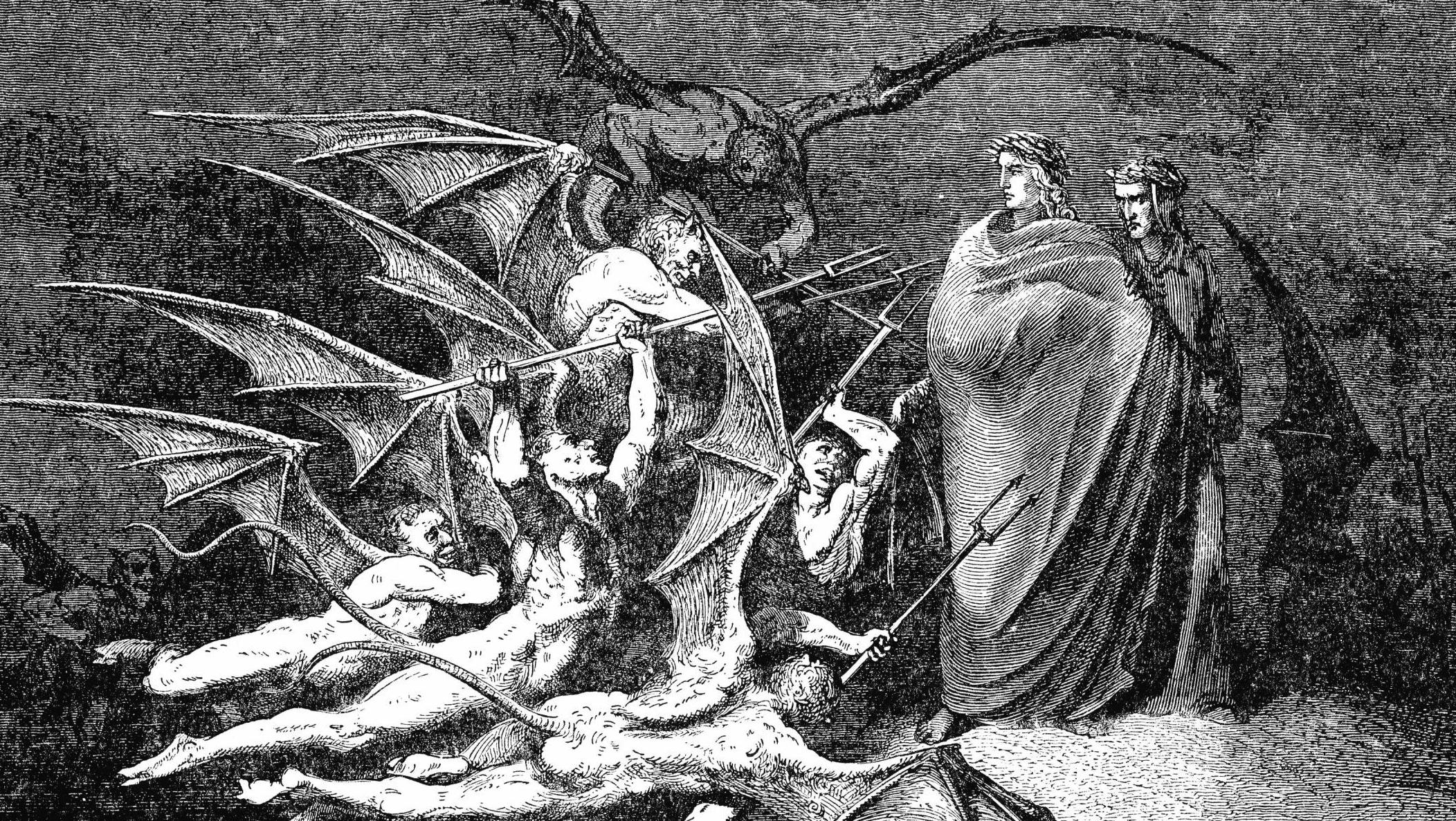
This is the most popular and widely accepted theory in mainstream Christianity. It posits that demons are angels who, under the leadership of Lucifer/Satan, rebelled against God and were cast out of Heaven.
The Bible never explicitly states, "Demons are fallen angels." The connection is built through inference:
- Isaiah 14:12-15: The "fall of Lucifer, son of the dawn" is a taunt against the King of Babylon, but early Church Fathers (like Origen and Jerome) interpreted it allegorically as the prideful fall of a preeminent angel.
- Luke 10:18: Jesus says, "I saw Satan fall like lightning from heaven," linking Satan to a primordial fall.
- Revelation 12:7-9: Describes a war in heaven where Michael fights "the dragon" (explicitly called Satan and the devil), who is thrown down to earth with "his angels." This passage is crucial, as it provides a narrative of angelic rebellion and expulsion.
- Jude 1:6 & 2 Peter 2:4: Speak of angels who "did not keep their own position" and whom God "cast into chains of gloomy darkness" to be kept for judgment. These are often cited as direct references to the imprisoned fallen angels.
Theological Implications of the Fallen Angel Theory:
- Evil as a Choice: Demons are corrupt intelligences who chose to rebel. This preserves God's goodness; He created angels as good, but they misused their free will.
- A Spiritual Hierarchy of Evil: Satan is their prince, a former archangel. Demons retain their angelic intelligence and power, albeit corrupted, making them formidable adversaries.
- A Cosmic War: Humanity is a battleground in a continuing war that began in heaven. Temptation is a strategic campaign.
- The Gender Problem: If demons are fallen angels, and angels in the Bible are always presented in masculine form, where do female demons (like succubi) come from? This theory struggles with this, often resorting to the idea of deceptive shapeshifting.
Theory 2: The Spirits of the Nephilim – The Legacy of the Watchers
This older and more complex theory originates in Jewish apocalyptic literature and is detailed most fully in the Book of Enoch, a text revered in some Jewish and Christian traditions but excluded from most biblical canons.
The story begins with a group of angels called The Watchers (mentioned briefly in Daniel 4). Their duty was to watch over humanity. Led by the angel Semyaza, 200 of them "lusted after the daughters of men" (Genesis 6:2). They descended to Mount Hermon, took human wives, and taught humanity forbidden arts (metallurgy, cosmetics, sorcery).
The union produced hybrid offspring: the Nephilim, giants of immense size and appetite who "devoured mankind" and plunged the earth into violence and chaos.
God's judgment was swift:
- The Watchers were bound in the desert until the final judgment.
- The Nephilim were destroyed in the Great Flood.
But here lies the critical twist. First Enoch 15:8-12 explains that when the giant bodies of the Nephilim were destroyed, their souls—being unnatural hybrids of spiritual and fleshly origin—could not find rest. God condemned them to roam the earth as disembodied, tormented spirits:
"But now the giants who are born from the (union of) the spirits and the flesh shall be called evil spirits upon the earth, because their dwelling shall be upon the earth and inside the earth. Evil spirits have come out of their bodies… They will become evil upon the earth and shall be called evil spirits."
These are the first beings explicitly called evil spirits (i.e., demons). Their nature is defined by hunger, rage, and resentment, as they are bound to the earth they once terrorized.
Theological Implications of the Nephilim Spirit Theory:
- Demons are Not Fallen Angels: The Watchers are imprisoned; they are not the demons roaming the earth. Demons are their children's ghosts. This creates a clear distinction between Satan's rebellion and the origin of common demons.
- Evil as a Corrupted Creation: Demons are the unnatural byproduct of a violated cosmic boundary (angel + human). They are a pollution, a consequence of sin, rather than the original sinners themselves.
- Explains Female Demons: As the spirits of beings born from human mothers, a mix of male and female demons logically exists.
- A More Personal Torment: These demons are not just rebellious angels; they are bitter, earth-bound ghosts with a specific grudge against humanity, whom they see as the cause of their miserable state.
Theory 3: The Lilith-Samael Lineage – The Demonic Adam and Eve
A more mystical tradition, found in the Zohar and later Kabbalistic texts, introduces another origin tied to the figure of Lilith.
According to this legend, Lilith was Adam's first wife, created equal from the earth. She fled Eden, refusing to be subordinate. In the wilderness, she coupled with the archangel Samael (often identified with Satan), becoming the Mother of Demons.
Their union produced countless demonic offspring (lilin). Furthermore, Lilith and female demons like Naamah (a descendant of Cain) are said to have seduced the Watchers, making them the instigators of the Nephilim event. This lineage merges the stories: Lilith and Samael birth the original demons, who then corrupt the Watchers to create more.
Implication: This frames demonic origin as a mirror of human origin—a corrupt parallel to Adam and Eve, born from pride and rebellion.
Satan's Role: Where Does the Devil Fit In?
All theories must account for Satan (the Adversary).
- In the Fallen Angel theory, he is their leader, the first rebel.
- In the Nephilim Spirit theory, his role is more complex. Texts like the Book of Jubilees show Satan (called Mastema) petitioning God to let some demons remain on earth to serve him, becoming their prince. Here, Satan commands demons but is not their origin; he is a separate, higher-order fallen angel who uses the Nephilim spirits as his army.
- In Islamic tradition, Iblis (Satan) is a Jinn (created from smokeless fire), not an angel. He refuses to bow to Adam out of pride. Demons (Shayatin) are other rebellious Jinn who follow him. This presents a third, distinct ontology where demons are from a different creation entirely.
Synthesis and Resolution: Can the Theories Be Reconciled?
The confusion stems from reading a vast, non-uniform textual tradition as a single story. A possible synthesis, embraced by some Church Fathers and occult traditions, is:
- The First Fall: Lucifer/Samael rebels through pride (becoming Satan).
- The Second Fall: The Watchers rebel through lust (triggered by Lilith's brood or human women).
- The Creation of Demons: The spirits of the slain Nephilim become the "rank and file" evil spirits on earth.
- The Unification: Satan, the original rebel, becomes the commander of these earth-bound spirits, organizing them into the infernal hierarchy described in grimories like the Ars Goetia.
This view allows Satan to be a fallen angel while explaining the distinct, earthier, and more numerous nature of common demons.
Conclusion: Why the Origin Matters
The contested origin of demons is not a trivial puzzle. It changes how we perceive the spiritual world:
- If they are Fallen Angels, we face a disciplined army of corrupted celestial intelligences in a cosmic war.
- If they are Nephilim Spirits, we are haunted by the bitter, homeless ghosts of a divine mistake, representing the lingering consequences of primordial sin.
- If they are the brood of Lilith, we confront a corrupted mirror of creation itself, a shadow lineage born of rebellion.
The Bible's silence may be intentional. Perhaps a single, tidy origin is less important than the functional reality these traditions agree upon: that there are malevolent spiritual forces opposed to God's order, that they are permitted to test humanity, and that their ultimate fate is destruction. The different origin stories are like different maps of the same terrifying territory—each revealing another facet of humanity's ancient struggle to understand the nature of evil itself.
Comments (Write a comment)
Showing comments related to this blog.