From Pāpūzu to Oni: A Global History of Demonic Entities
An In-Depth Exploration
Introduction: The Many Faces of Fear
Long before the word "demon" was spoken in the context of Christian hellfire or Satanic rebellion, the world was already haunted. Our ancestors peered into the darkness and gave shape to what they could not control: disease, storms, infant mortality, madness, and death itself.
The demon is not a Western invention. It is a human response to the inexplicable and the terrifying—a response that has taken thousands of forms, each reflecting the unique fears, taboos, and moral frameworks of its culture. This is not a history of a single idea, but a global tapestry of terror, woven from the shared human need to name what frightens us.
The Mesopotamian Dawn: Demons as Forces of Nature and Misfortune
In the cradle of civilization, "demons" were not yet the servants of a supreme evil. In ancient Mesopotamia, they were simply forces—udug or utukku—part of a cosmos teeming with spirits. These entities were morally ambiguous; they could be protective or destructive. But the most feared were those of pure misfortune.
Pāpūzu (Pazuzu): The Demon Who Fights DemonsOften called the "King of the Wind Demons," Pazuzu was a grotesque hybrid: a canine jaw, eagle talons, a scorpion tail, and wings. He brought the destructive Southwest Wind, famine, and locusts during the dry season. Yet, paradoxically, his image was carved onto amulets to protect against something even worse. Fear of him became a weapon against greater evils. He was, in a sense, a demonic guardian.
Lamashtu: The Lone PredatorIf Pazuzu was a force, Lamashtu was a predator. She acted without the command of any god, a terrifying concept in a world ordered by divine will. She was the tormentor of mothers and children—causing miscarriages, poisoning breast milk, snatching infants from their cribs. Her image was monstrous: lion-headed, with donkey teeth, clutching snakes, and riding a donkey. Rituals against her were incredibly specific, involving buried figurines and offerings to distract her malevolent focus.
The Rabisu: Ambushers in the Liminal SpacesThese "lurkers" haunted thresholds, graveyards, and forgotten corners. They were not always purely evil; sometimes they were shadowy agents of divine punishment. But their effect was the same: terror, illness, sleep paralysis. The response? Inscribed clay tablets and buried figurines to seal the home.
Key Takeaway: Mesopotamian demonology was a survival strategy. Know the name, say the spell, seal the door. It was practical, not yet cosmological.
Egypt: The Cosmic and the Personal Threat
In Egypt, the line between god and demon was blurry. The cosmos was a battle between order (Ma'at) and chaos (Isfet), and demons could be agents of either.
Apep (Apophis): The Serpent of AnnihilationThe ultimate face of chaos was Apep, the great serpent who tried to devour the sun god Ra each night during his journey through the underworld. Apep wasn't "evil" in a moral sense; he was non-existence, the end of light and being. Fighting him was a daily cosmic ritual involving curses, effigy burning, and the symbolic erasure of his name.
Ammut: The Personal JudgmentIn the personal afterlife, the demon Ammut—"the Devourer of the Dead"—awaited. With the head of a crocodile, the torso of a lion, and the hindquarters of a hippo, she was built from Egypt's most feared predators. If a heart, weighed against the feather of Ma'at, was heavy with sin, Ammut consumed it, resulting in a "second death" of complete annihilation. To pass safely, the dead needed the Book of the Dead—a guidebook of passwords, spells, and amulets.
Key Takeaway: Egyptian demonology was a structured labyrinth, a map of spiritual threats where every monster had a name and every name had a counter-spell. It addressed both cosmic and deeply personal eschatological fears.
The Zoroastrian Turning Point: The Birth of Moral Dualism
With Zoroastrianism (circa 1500-600 BCE), the concept of evil underwent a profound transformation. This was one of the first belief systems to divide the universe into metaphysical forces of good and evil.
- Ahura Mazda: The wise lord of truth, light, and order.
- Angra Mainyu (Ahriman): The "destructive spirit," the embodiment of lies, darkness, and death.
Unlike the chaotic spirits of Mesopotamia, Angra Mainyu was malevolent with a strategy. He waged a deliberate war on creation. His followers, the daevas, were spirits who chose to follow falsehood and corruption.
Key Takeaway: This was the moment demonology became theology. Evil was no longer just a dangerous force; it was a deliberate, intelligent adversary in a cosmic war. Human action mattered—every lie fed the demon's cause. This framework directly influenced later Abrahamic demonology.
Beyond the West: Demons of Dharma, Ghosts, and the Untamed Wild
While Western demonology later focused on hierarchies and pacts, other cultures developed their own rich, complex systems of malevolent entities.
- Asuras: Originally divine beings, they became proud, ambitious rivals to the devas (gods). They are not evil by nature but are adversaries of cosmic order due to their defiance of dharma.
- Rakshasas: Flesh-eating shape-shifters known for cunning and cruelty, like the demon-king Ravana of the Ramayana.
- Vetālas: Spirit-possessed corpses that hang upside-down in trees and graveyards, speaking in riddles. They exist in a parasitic, liminal state between worlds.
Here, demons (mogui) are often the ghosts of the improperly buried, the vengeful, or those with unfinished business. They reflect a society obsessed with social and familial order. Countering them involved:
- A full bureaucracy of the afterlife with hell judges and courts.
- Folk heroes like Zhong Kui, the demon-queller.
- Taoist magic using vermillion-inscribed paper talismans (fu) burned to activate their power.
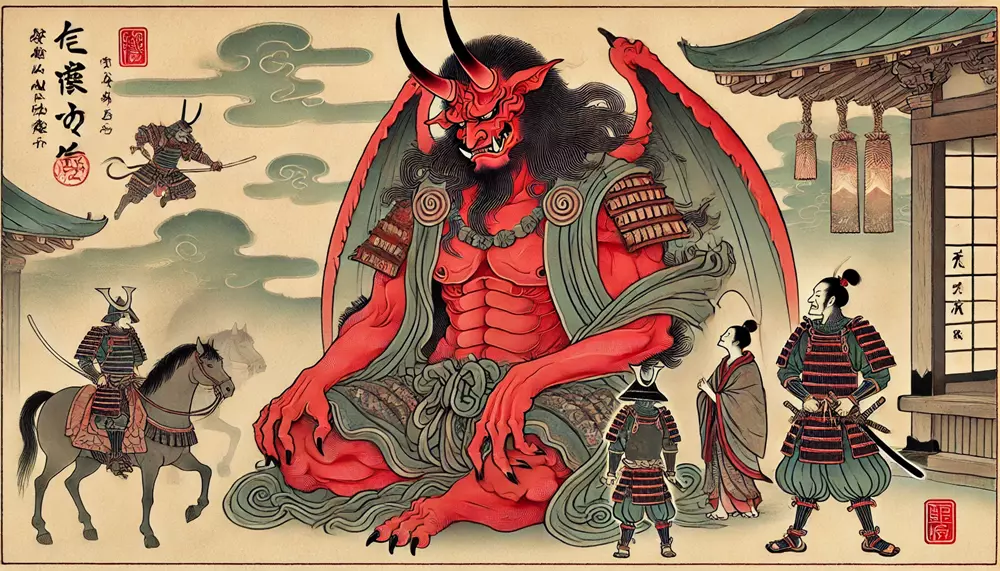
Japanese "demons" are deeply tied to emotion, place, and social anxiety.
- Oni: Horned, tusked ogres often born from human wickedness or during times of plague. They are punishing spirits but can be appeased during festivals.
- Yōkai: An umbrella term for hundreds of strange creatures, from playful to nightmarish. They include Tsukumogami—objects that come to life after 100 years, embodying the resentment of being forgotten.
- Key Insight: Japanese demons are often metaphors for isolation, resentment, shame, and the fear of losing one's place in the world. Fear here is a relationship, sometimes managed through offering rice or song.
- West Africa (Ashanti): The Obayifo, a vampiric witch-spirit that feeds on children's life force, glowing with an eerie phosphorescence.
- North America (Algonquian): The Wendigo, a spirit of winter, starvation, and insatiable hunger—a monster born from the taboo of cannibalism. It is both a creature and a warning.
- Navajo Nation: The Skinwalker, a witch who violates ultimate taboos by wearing animal skins to gain power, representing a complete betrayal of humanity and cultural order.
The Unifying Threads: What Global Demons Ask Us
Despite oceans and millennia of separation, these entities ask remarkably similar questions:
- What is Forbidden? Demons patrol the boundaries of taboo—cannibalism (Wendigo), violating burial rites (Vetāla), betraying social roles (Skinwalker).
- What is Sacred? They are defined by what they oppose: cosmic order (Apep), divine will (Lamashtu), dharma (Asuras), or familial piety (Chinese ghosts).
- What Happens When Balance is Broken? They are the consequence of imbalance—chaos over order, selfishness over community, pride over humility.
Conclusion: Mirrors of Ourselves
The journey from Pāpūzu to the Oni reveals that "demons" are far more than simple monsters. They are cultural diagnostics. The storm demon reflects an agrarian society's dependence on climate. The bureaucratic hells of China mirror its imperial administrative structure. The psychological yōkai of Japan externalize internal social pressures.
Our ancestors did not create these beings out of pure fantasy. They sculpted them from the raw materials of their greatest fears: the death of a child, the failure of a crop, the terror of the wild, the corruption of the soul, and the terrifying possibility of being forgotten.
To study the global history of demons is to study a history of human anxiety, morality, and the endless quest to explain why suffering exists. They are, and have always been, the dark mirrors in which we see the contours of our own societies—and our own souls—reflected back in monstrous form.
Comments (Write a comment)
Showing comments related to this blog.