From Demons to Aliens: How Technology Rewrites Our Supernatural Narratives
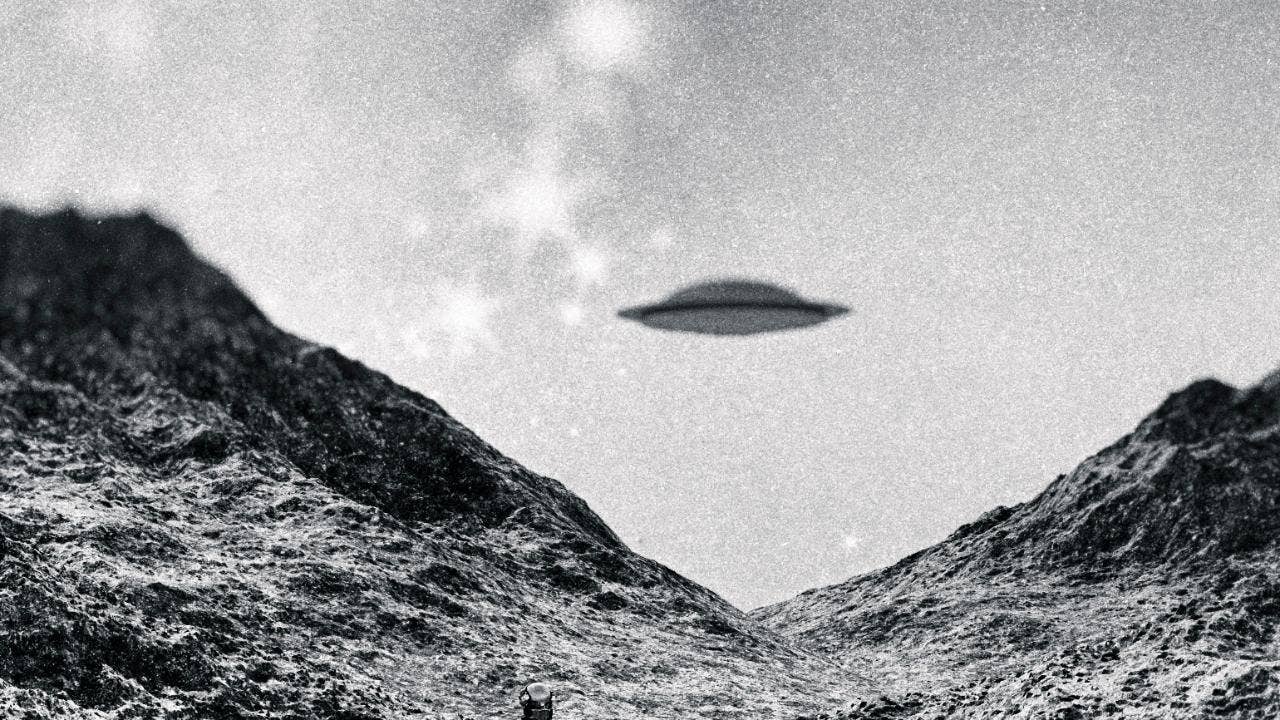
Human beings have always encountered the unknown—but how we describe those encounters changes with our worldview. Medieval Europe saw demons and angels. The 19th century saw fairies and spirits. The mid-20th century brought flying saucers and extraterrestrials. Today, with quantum theory and interdimensional speculation, the language has shifted again.
Technology doesn’t just shape our tools—it shapes our interpretation of the supernatural. And nowhere is this clearer than in early aviation UFO sightings and the strange physical manifestations at modern hotspots like Rendlesham Forest.
Below is a combined exploration of three interconnected ideas:
1) how our supernatural vocabulary evolves,
2) why early pilots saw “angels,” and
3) the puzzling physical apports that appear in UFO zones.
1. From Demons to Aliens: Technology Shapes the Paranormal
Throughout history, humans have described mysterious encounters using whatever cultural framework was most available:
Medieval Europe:
- Winged angels descending from the sky
- Demons pressing on the chest at night (incubi, succubi)
- Fiery chariots and heavenly wheels
Victorian Age:
- Fairies, sylphs, table-tipping spirits
- Ectoplasmic apparitions
Industrial & Atomic Era (1940s–1960s):
- Metallic discs
- Beings with suits, helmets, or radiation
- Structured craft with lights and windows
Digital & Quantum Age:
- Interdimensional entities
- Ultraterrestrials
- Consciousness-based intelligences
- AI-created or AI-piloted craft
The file you provided repeatedly emphasizes that the phenomenon stays the same—but the interpretation changes. One researcher notes that “in the Middle Ages you'd see an angel—today you’d see an alien,” because each era “sees experiences through the lens of its time.”
This evolving vocabulary reveals as much about us as about the phenomenon itself.
2. When Pilots Saw Angels: The Portland Airlines Formation of 1947
Just weeks after Kenneth Arnold’s famous June 24, 1947 sighting—which coined the term “flying saucers”—other pilots began reporting structured formations of strange aerial objects.
One of the most fascinating early cases involved Portland Airlines pilots witnessing a formation of bright, fast-moving objects that:
- maneuvered unlike any known aircraft
- flew in formation with precision
- appeared metallic or reflective
- seemed to demonstrate intelligent control
At the time, many pilots described the objects not as “aliens,” but as:
- “fiery angelic beings”
- “heavenly lights”
- “messengers” or “signs”
Why angels? Because the extraterrestrial framework wasn’t yet dominant—this was barely a month after Arnold’s sighting. The technological language for UFOs had not yet formed, so the pilots fell back on the older supernatural vocabulary.
This moment captures the psychological transition from divine sky visitors to extraterrestrial craft—the pivot point where modern UFO culture began.
3. Hot Stones From Nowhere: The Apport Phenomenon in Rendlesham Forest
Among the most bizarre cross-phenomena described in your transcript is the apport event in Rendlesham Forest.
Witnesses described:
- objects falling from nowhere in pitch-black forest
- stones landing near investigators
- some stones so hot they could barely be touched
- no sound of movement, footsteps, or throwing
- no witnesses present who could have planted them
The stones appeared as if materializing out of thin air.
This parallels classic poltergeist apports, where objects manifest or relocate mysteriously. But in Rendlesham, a UFO hotspot, the event blurs the line between:
- paranormal (apports)
- UFO phenomena (light orbs, craft)
- interdimensional activity
The file quotes a witness describing a recurring pattern:
“You’d hear something drop—then find a stone so hot you could barely hold it. What energy moves a stone like that?”
The heat suggests:
- high-energy displacement
- teleportation-like phenomena
- or exposure to powerful electromagnetic or plasma fields
This aligns with theories that UFOs distort space, time, and local energy when entering our environment.
A Single Phenomenon, Many Interpretations
The three themes—changing supernatural language, pilots seeing angels, and apport phenomena—point toward a single conclusion:
The phenomenon interacts with human perception, belief, and environment, adapting its presentation to the era.
- Medieval peasants saw angels because they had no concept of spacecraft.
- Early pilots used angelic metaphors before “UFO” culture existed.
- Modern investigators witness apports, orbs, and craft in the same locations—suggesting a multi-layered intelligence expressing itself through whatever form will be understood.
Whether the intelligence is:
- extraterrestrial
- interdimensional
- ultraterrestrial
- psychic and consciousness-based
- or something older and undiscovered
…the continuity across eras implies a shared source behind many supernatural narratives.
Technology didn’t change the phenomenon.
It changed our interpretation of it.
Comments (Write a comment)
Showing comments related to this blog.